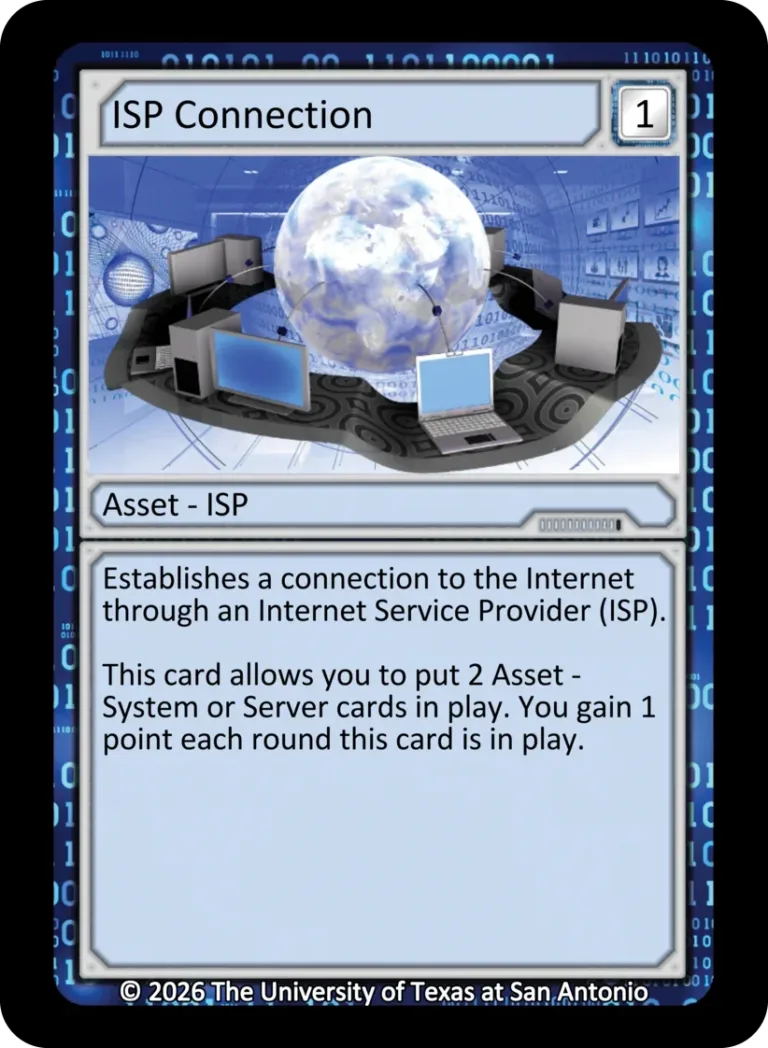
Celebrate a decade of cyber defense with the Cyber Threat Defender Anniversary Starter Deck! This special edition features 54 cards across Asset, Defense, Event and Attack types, as well as redesigned card frames, refreshed artwork on familiar favorites, and the return of sought-after cards originally released in booster packs that are now out of circulation. Plus, meet brand-new additions like the Satellite ISP asset card, bringing even more possibilities to your network-building strategy. Sold as a standalone purchase item; the 2021 CTD Starter Deck remains the classroom-box deck.
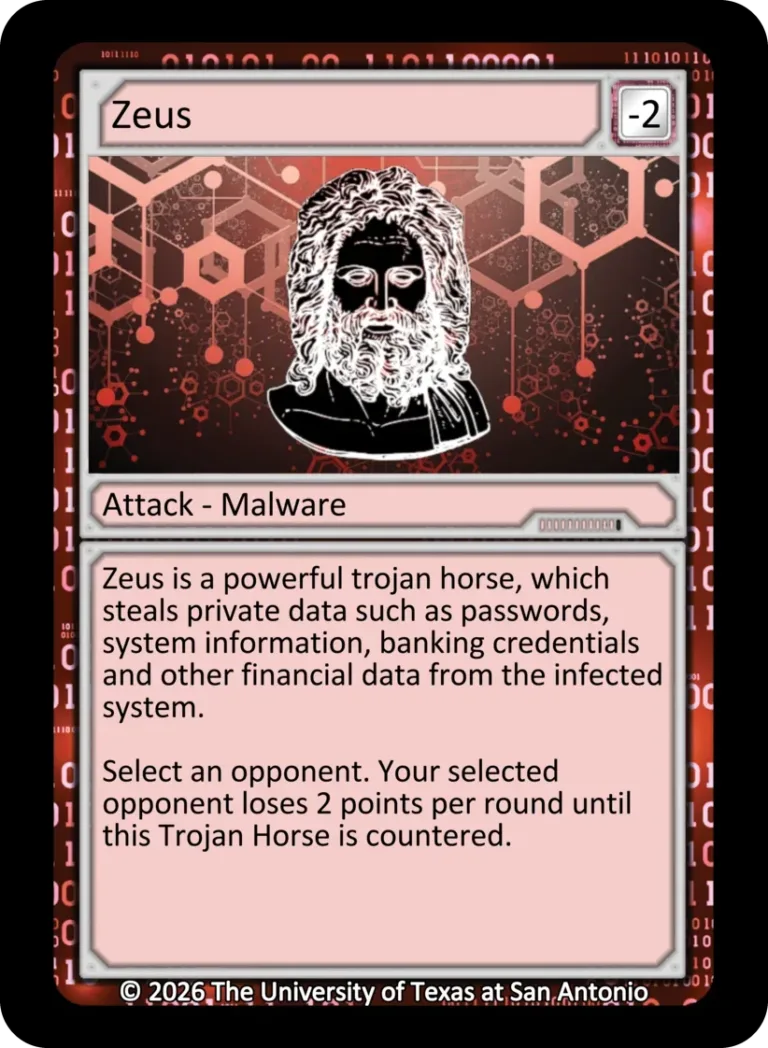
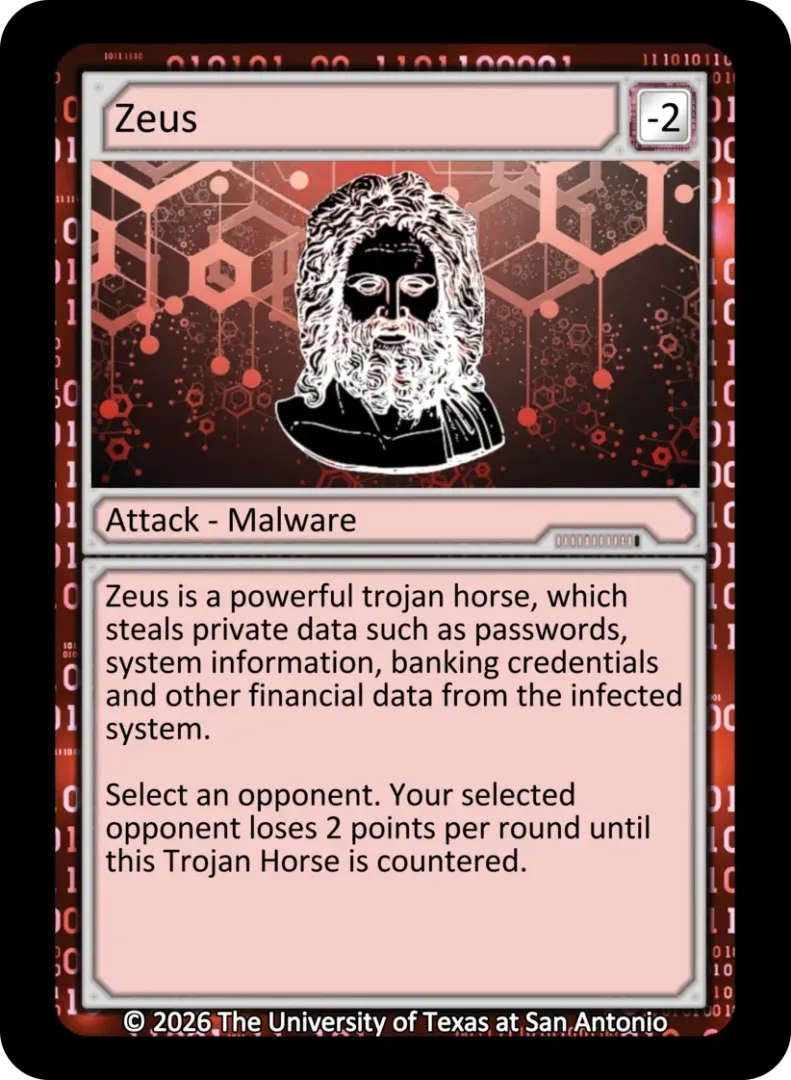
Zeus is a powerful trojan horse, which steals private data such as passwords, system information, banking credentials and other financial data from the infected system.
Select an opponent. Your selected opponent loses 2 points per round until this Trojan Horse is countered.
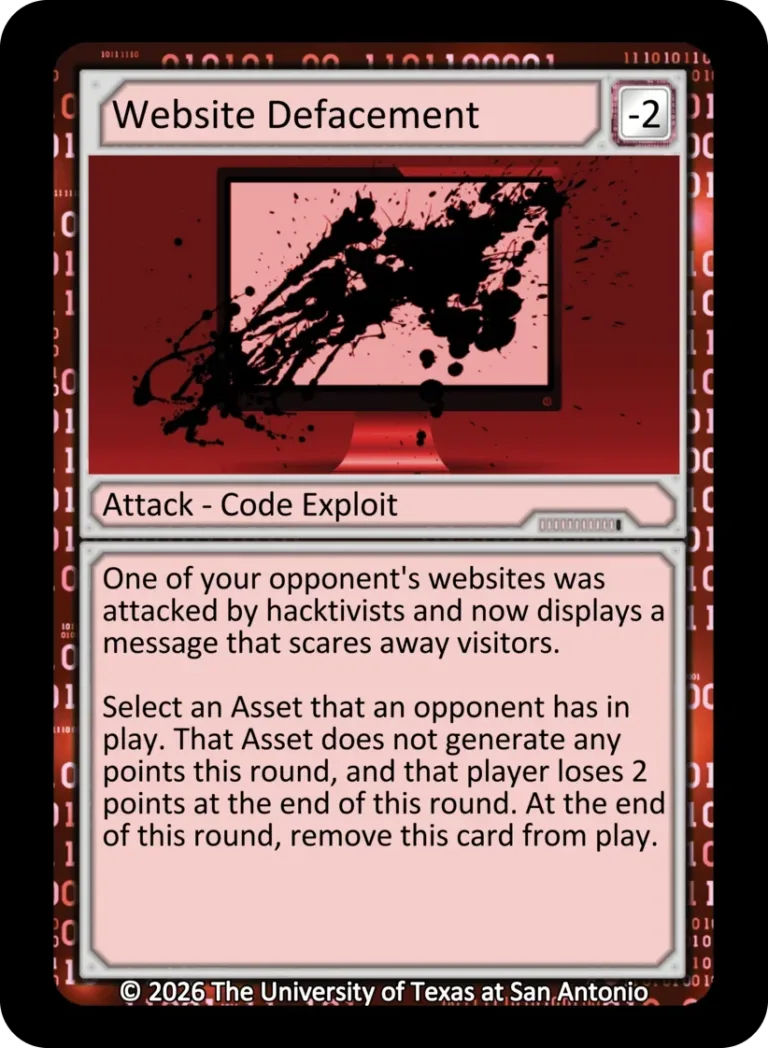
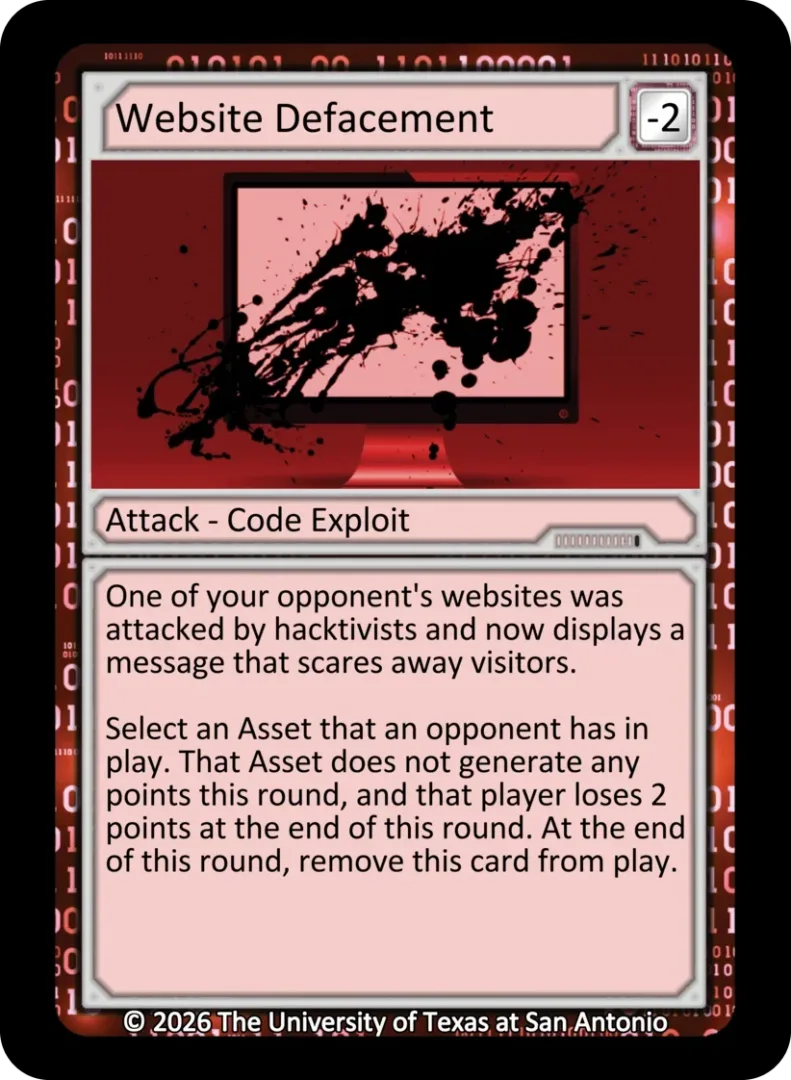
One of your opponent’s websites was attacked by hacktivists and now displays a message that scares away visitors.
Select an Asset that an opponent has in play. That Asset does not generate any points this round, and that player loses 2 points at the end of this round. At the end of this round, remove this card from play.
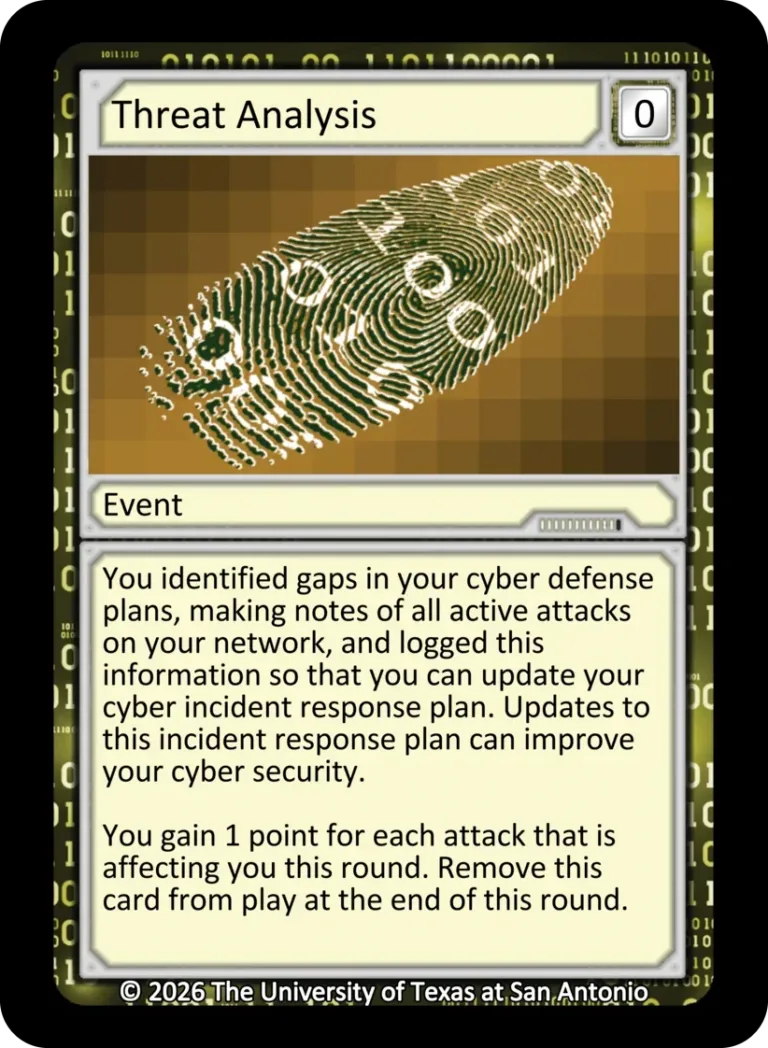
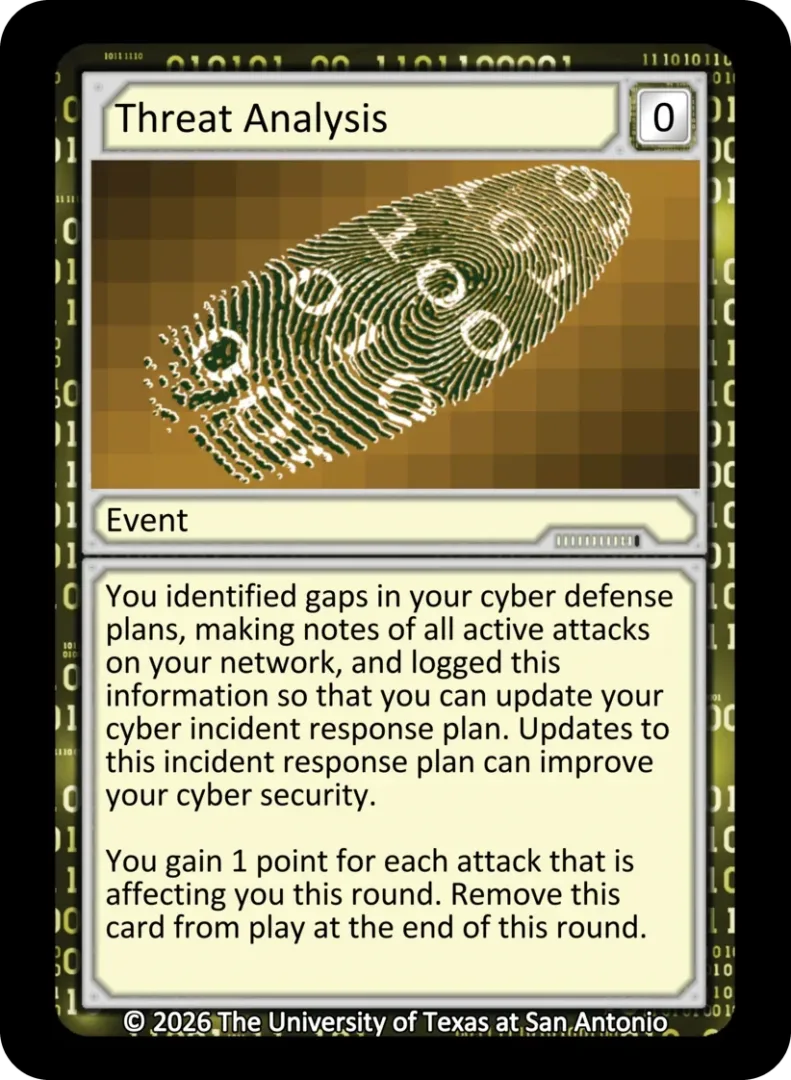
You identified gaps in your cyber defense plans, making notes of all active attacks on your network, and logged this information so that you can update your cyber incident response plan. Updates to this incident response plan can improve your cybersecurity.
You gain 1 point for each attack that is affecting you this round. Remove this card from play at the end of this round.
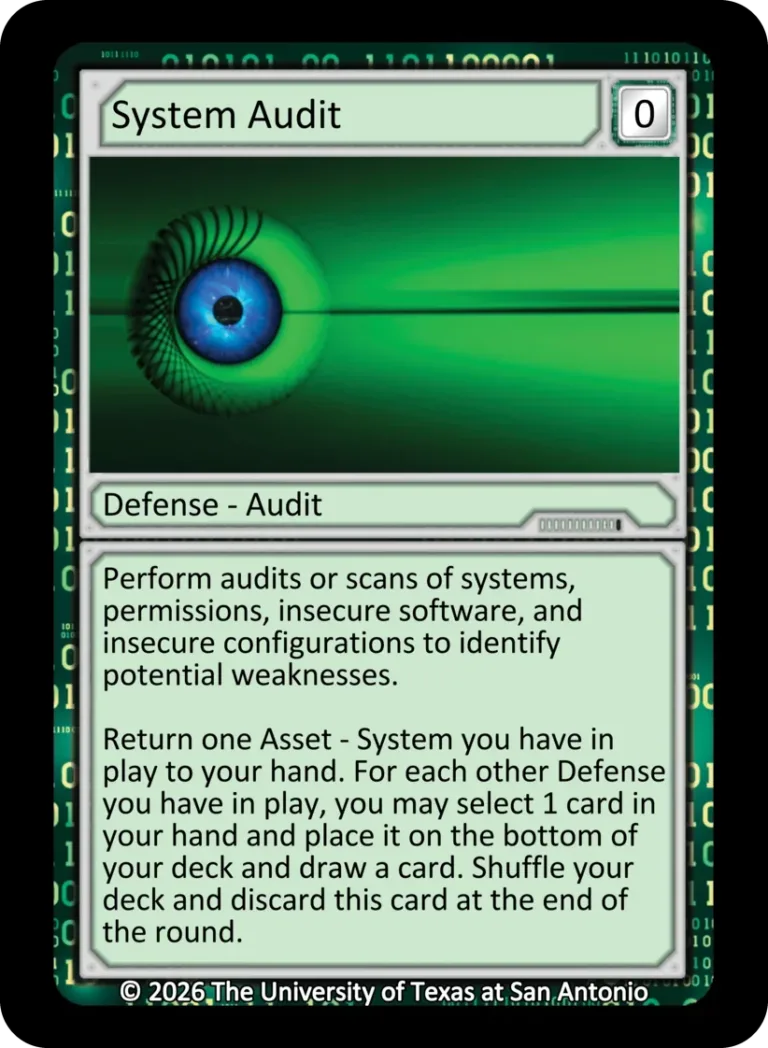
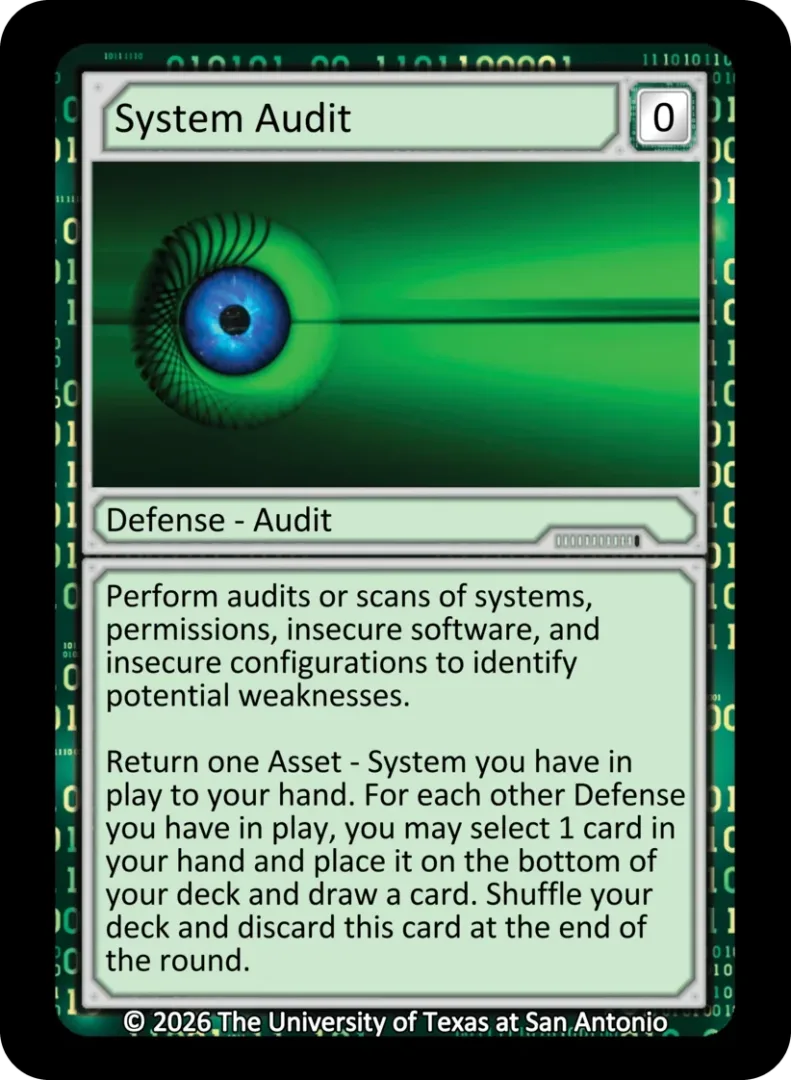
Perform audits or scans of systems, permissions, insecure software and insecure configurations to identify potential weaknesses.
Return an Asset – System card you have in play to your hand. For each other Defense you have in play, you may select 1 card in your hand and place it on the bottom of your deck and draw a card. Shuffle your deck and discard this card at the end of the round.
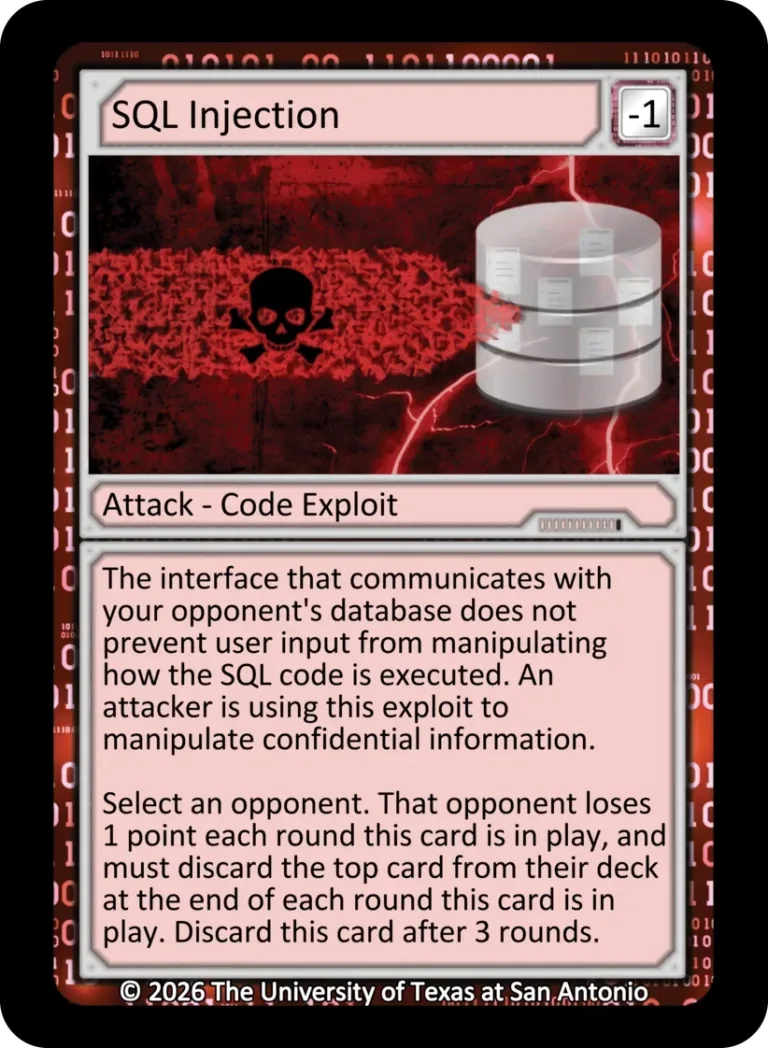
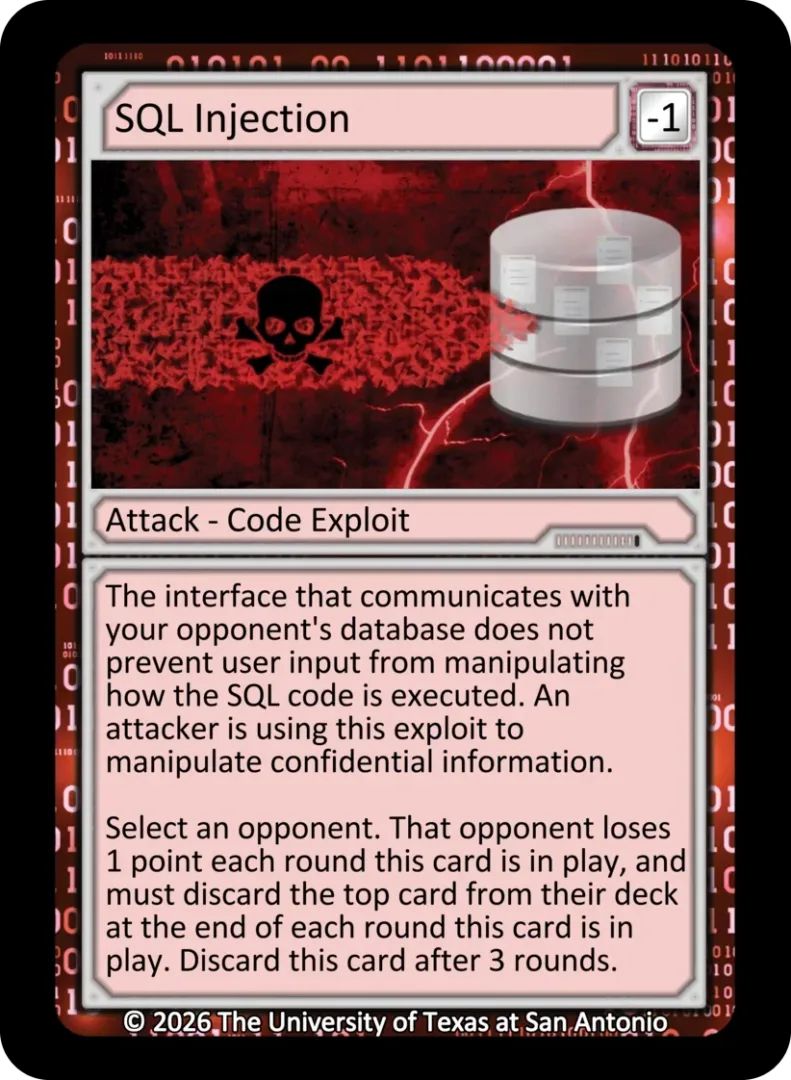
The interface that communicates with your opponent’s database does not prevent user input from manipulating how the SQL code is executed. An attacker is using this exploit to manipulate confidential information.
Select an opponent. That opponent loses 1 point each round this card is in play, and must discard the top card from their deck at the end of each round this card is in play. Discard this card after 3 rounds.
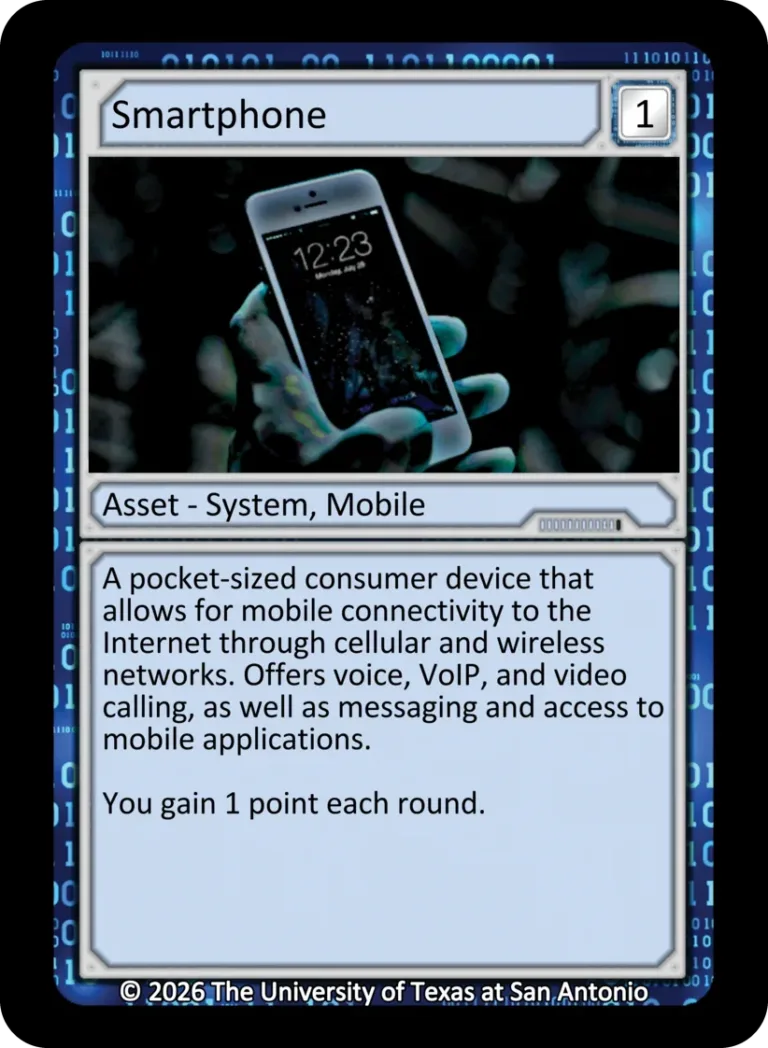
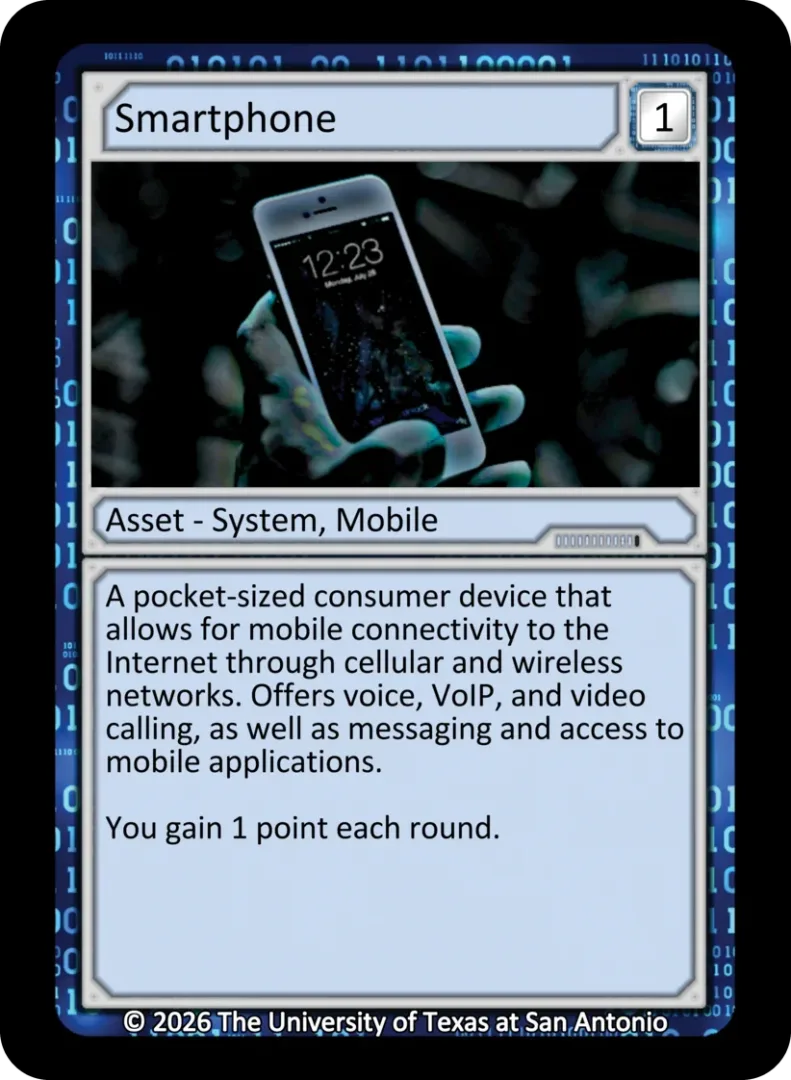
A pocket-sized consumer device that allows for mobile connectivity to the Internet through cellular and wireless networks. Offers voice, VoIP and video calling, as well as messaging and access to mobile applications.
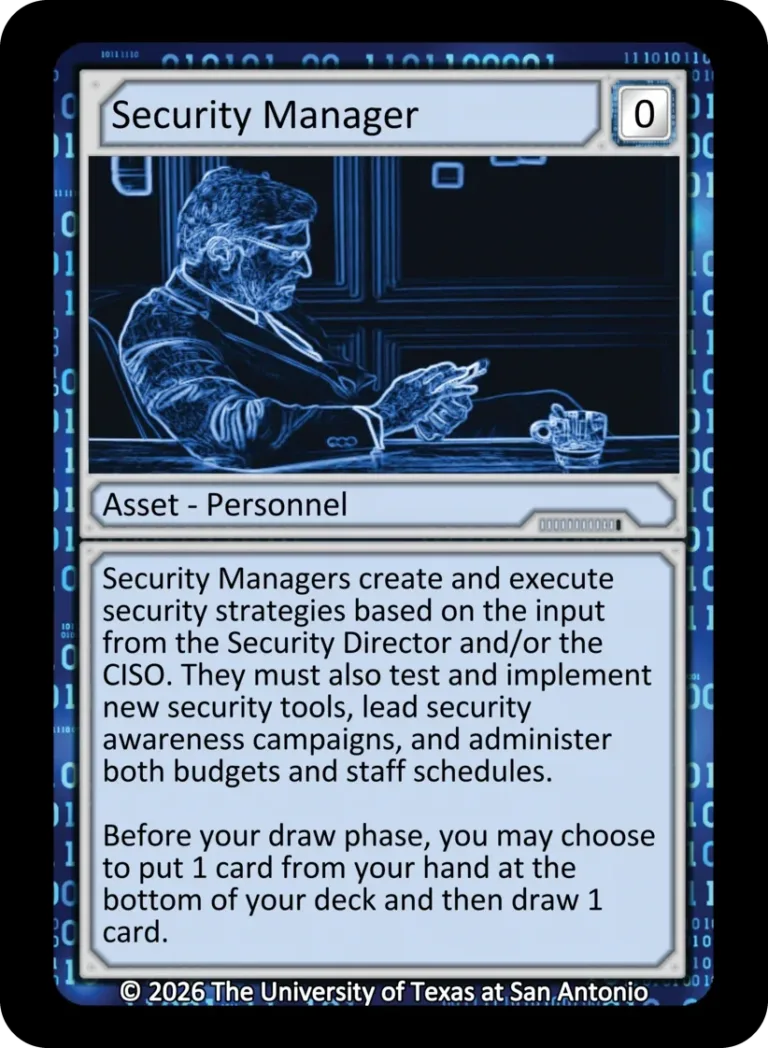
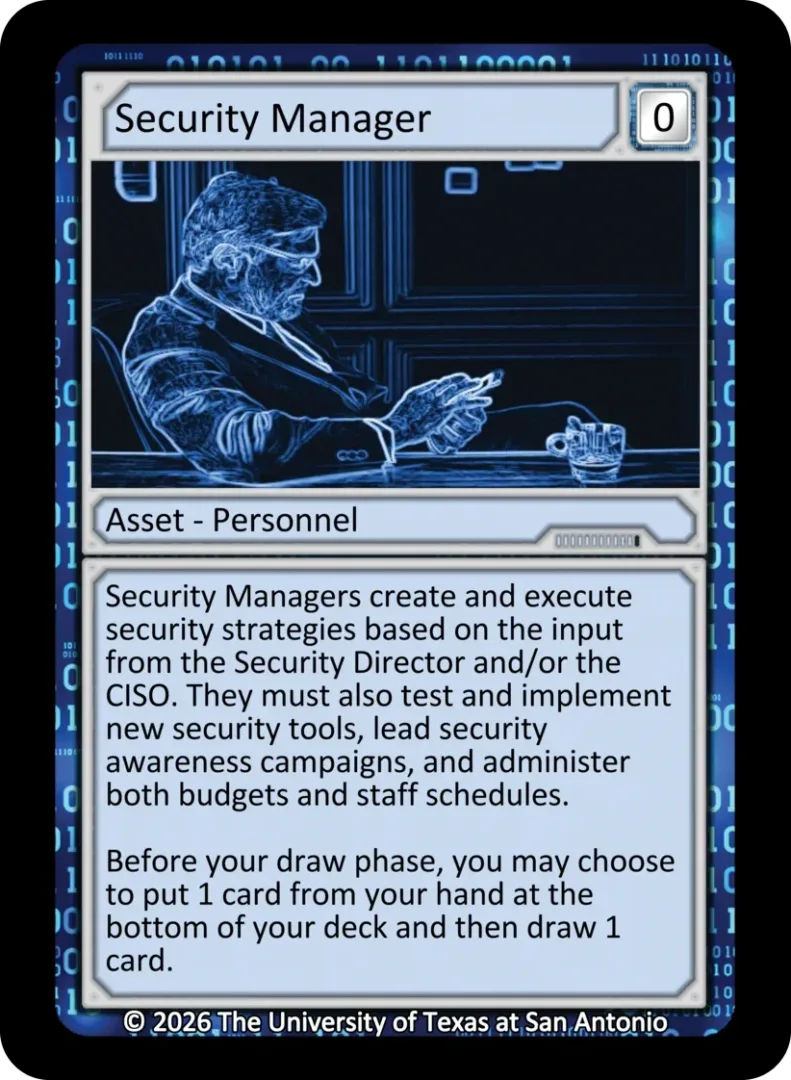
Security Managers create and execute security strategies based on the input from the Security Director and/or the CISO. They must also test and implement new security tools, lead security awareness campaigns and administer both budgets and staff schedules.
Before your draw phase, you may choose to put 1 card from your hand at the bottom of your deck and then draw 1 card.
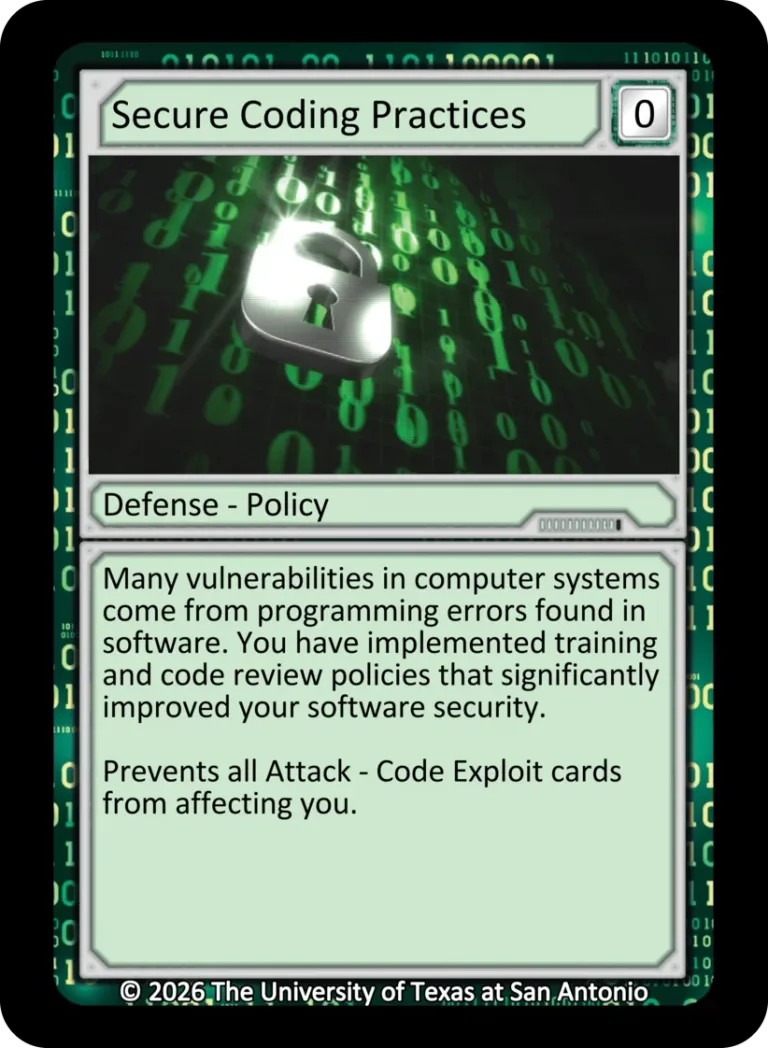
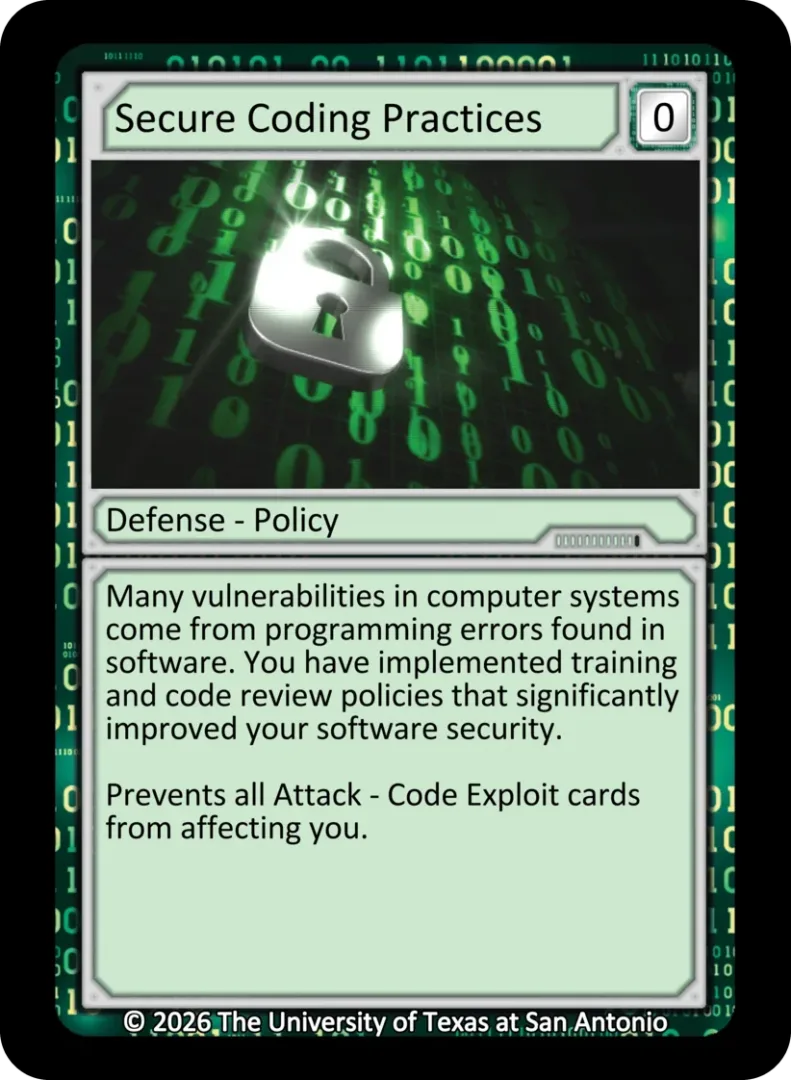
Many vulnerabilities in computer systems come from programming errors found in software. You have implemented training and code review policies that significantly improved your software security.
This card prevents all Attack – Code Exploit cards from affecting you.
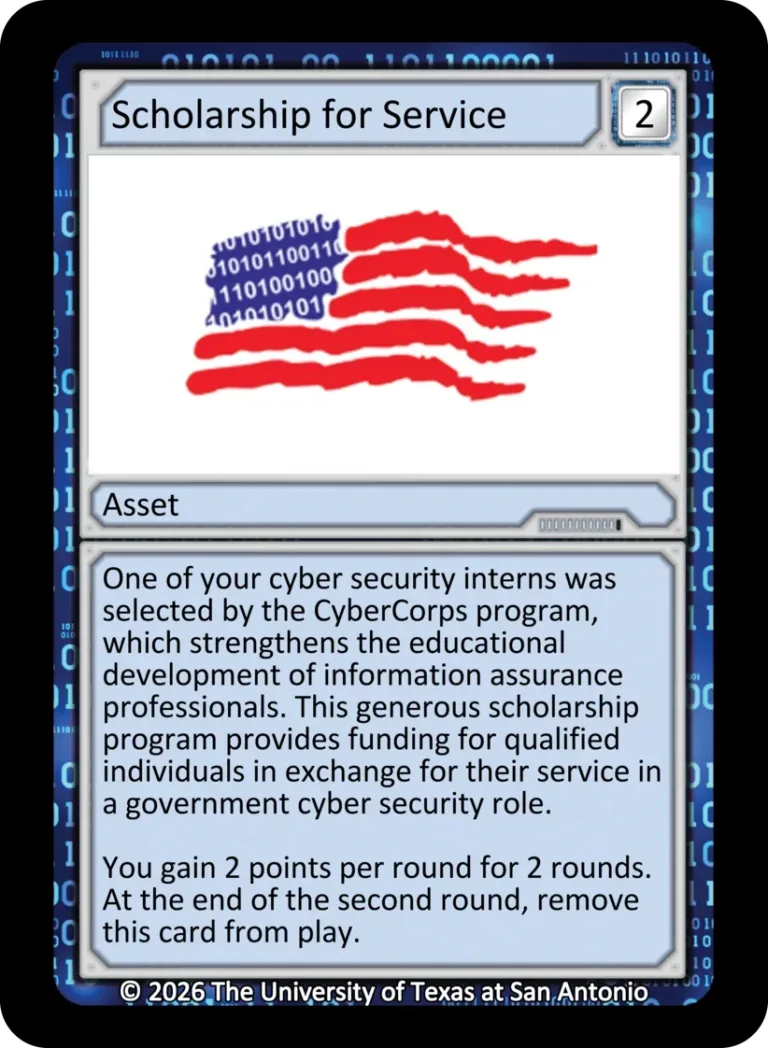
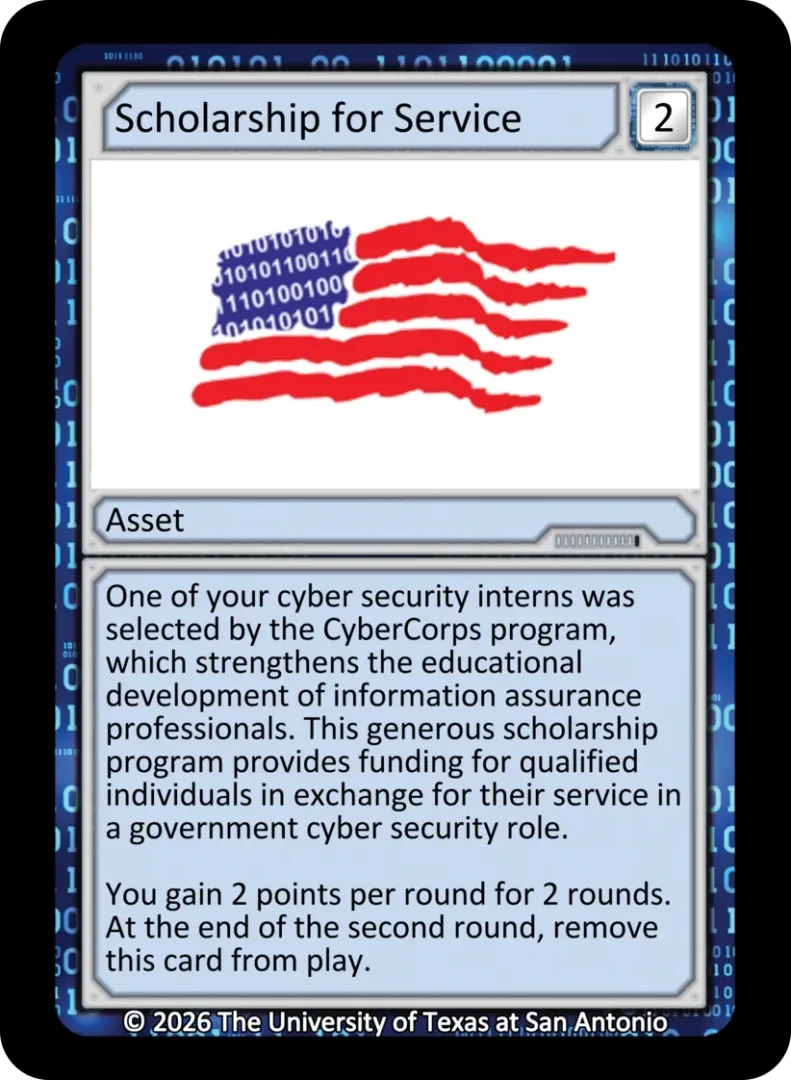
One of your cybersecurity interns was selected by the CyberCorps program, which strengthens the educational development of information assurance professionals. This generous scholarship program provides funding for qualified individuals in exchange for their service in a government cybersecurity role.
You gain 2 points per round for 2 rounds. At the end of the second round, remove this card from play.
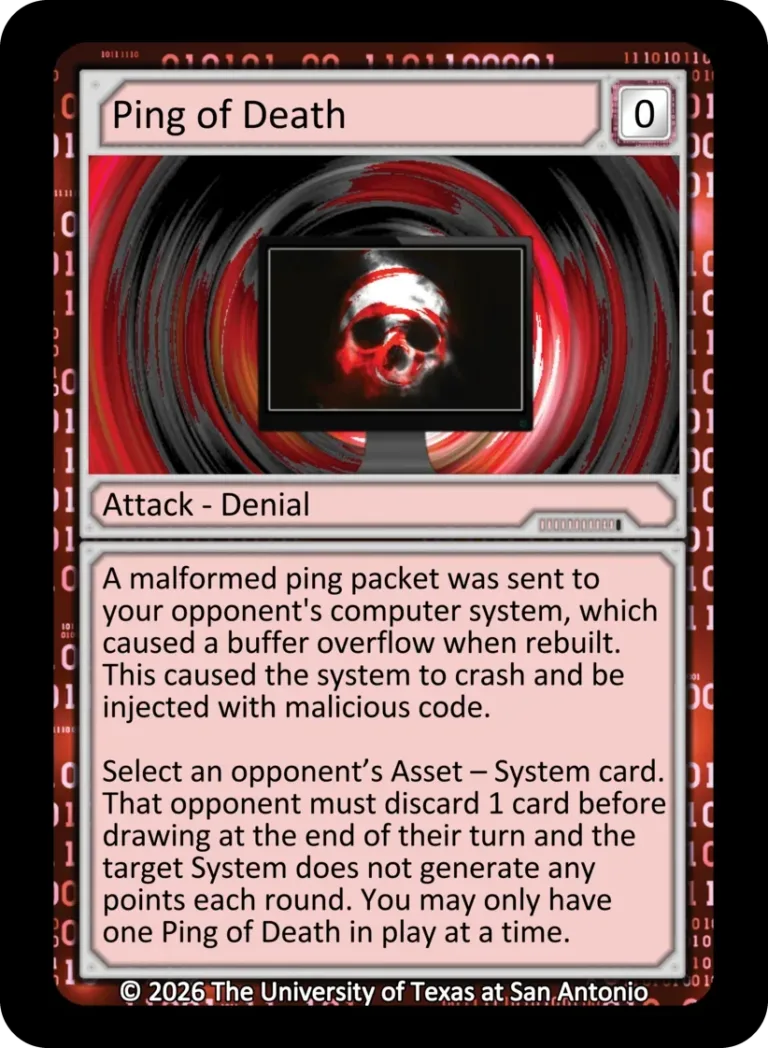
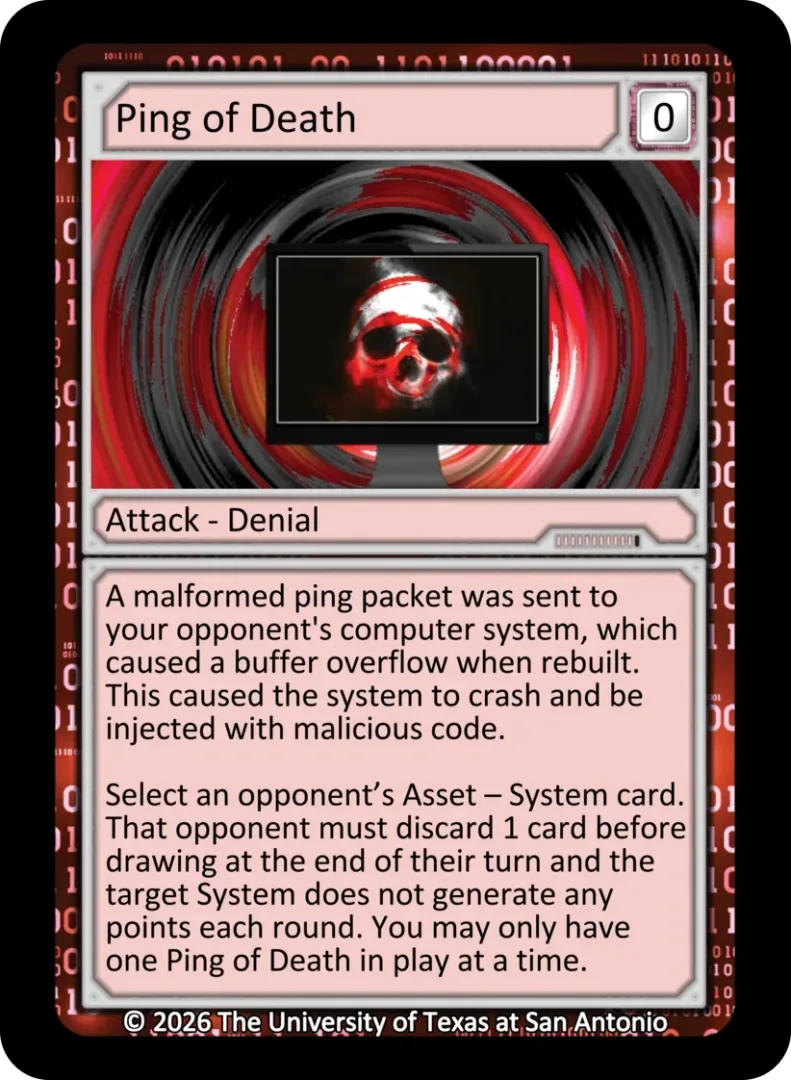
A malformed ping packet was sent to your opponent’s computer system, which caused a buffer overflow when rebuilt. This caused the system to crash and be injected with malicious code.
Select an opponent’s Asset – System card. That opponent must discard 1 card before drawing at the end of their turn and the targeted System does not generate any points each round. You may only have one Ping of Death in play at a time.
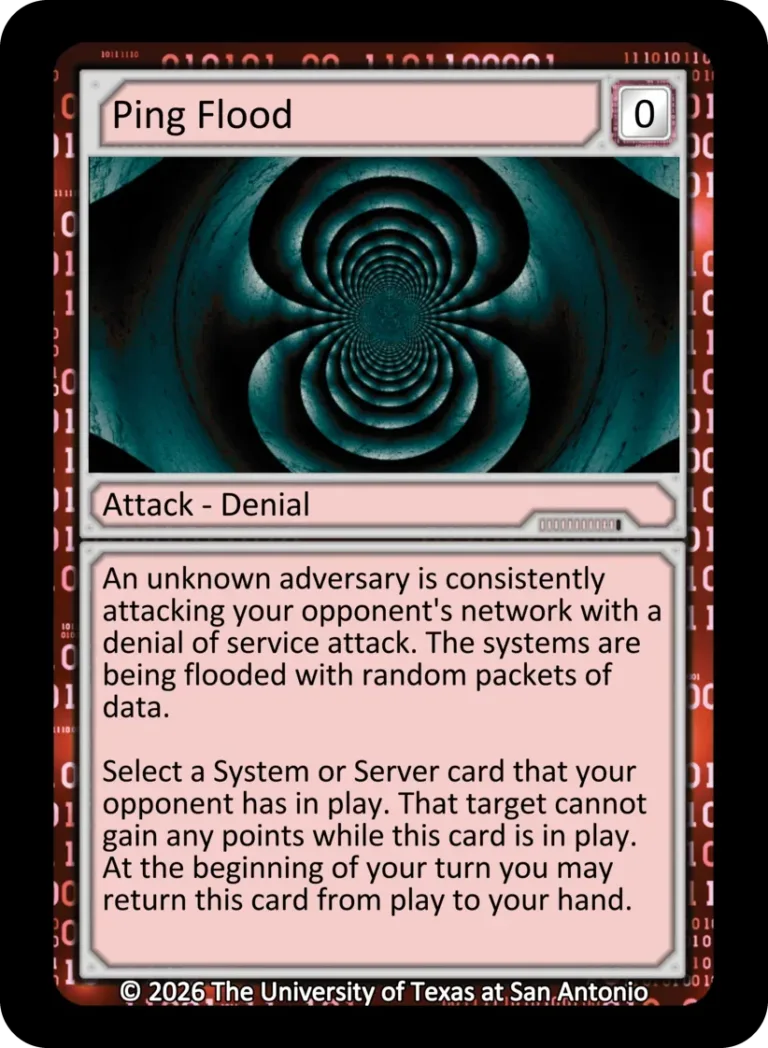
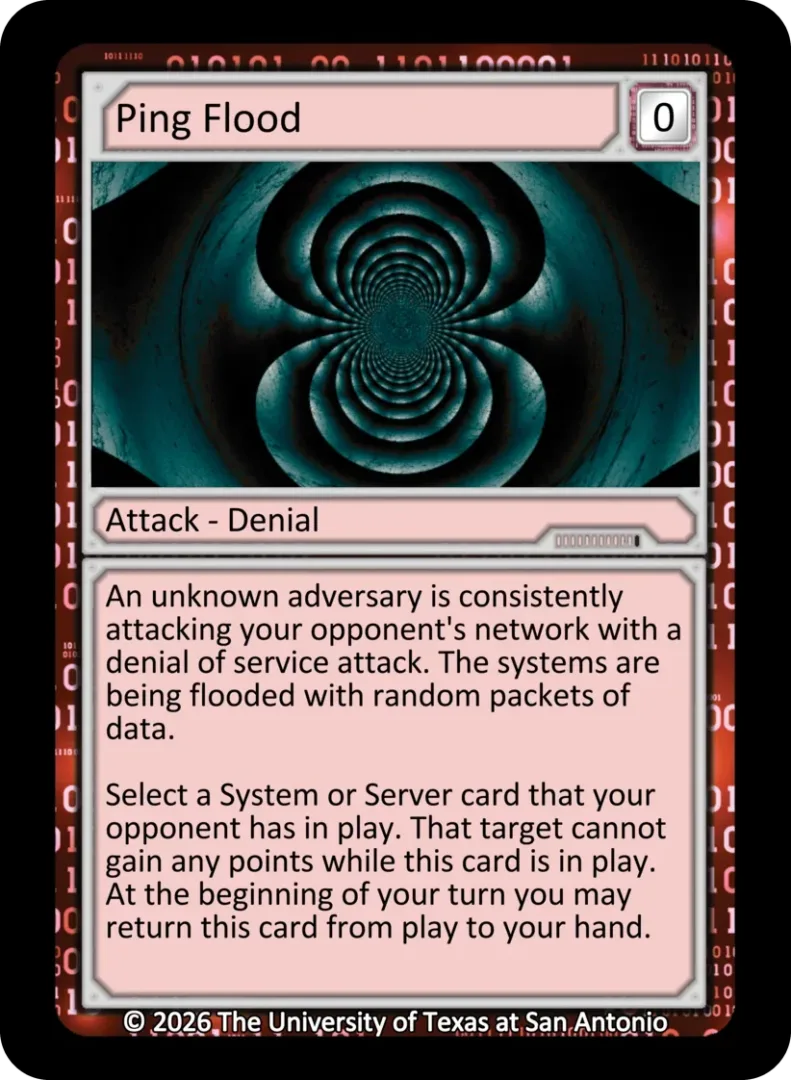
An unknown adversary is consistently attacking your opponent’s network with a denial of service attack. The systems are being flooded with random packets of data.
Select a System or Server card that your opponent has in play. That target cannot gain any points while this card is in play. At the beginning of your turn, you may return this card from play to your hand.
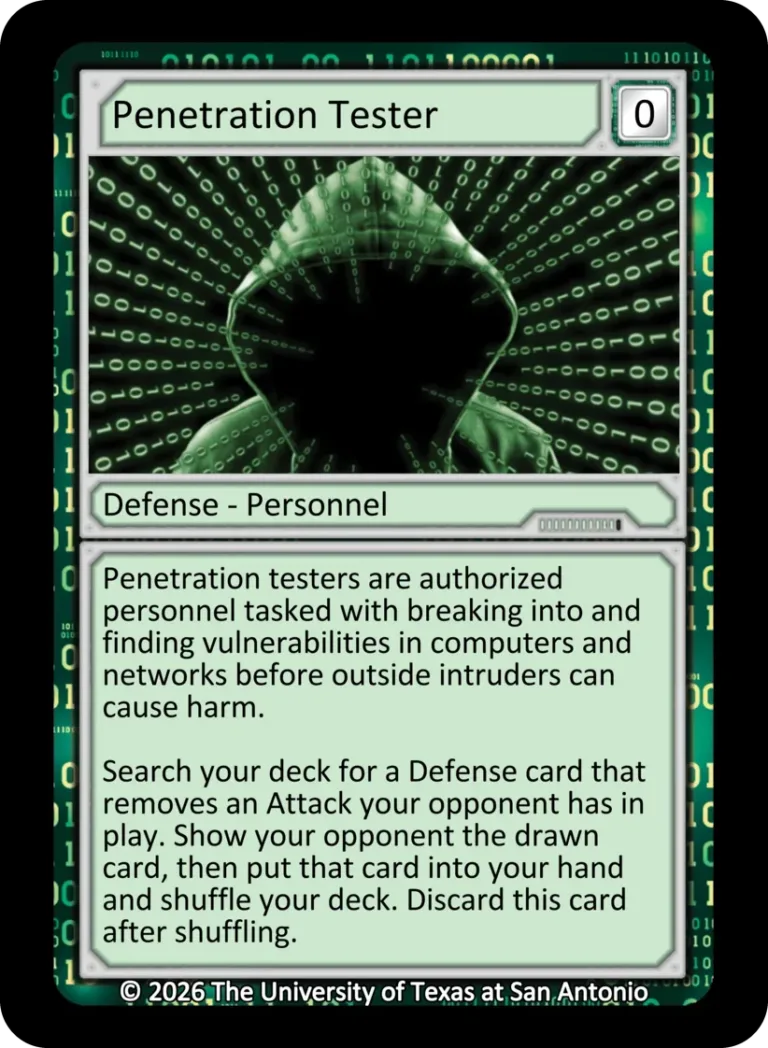
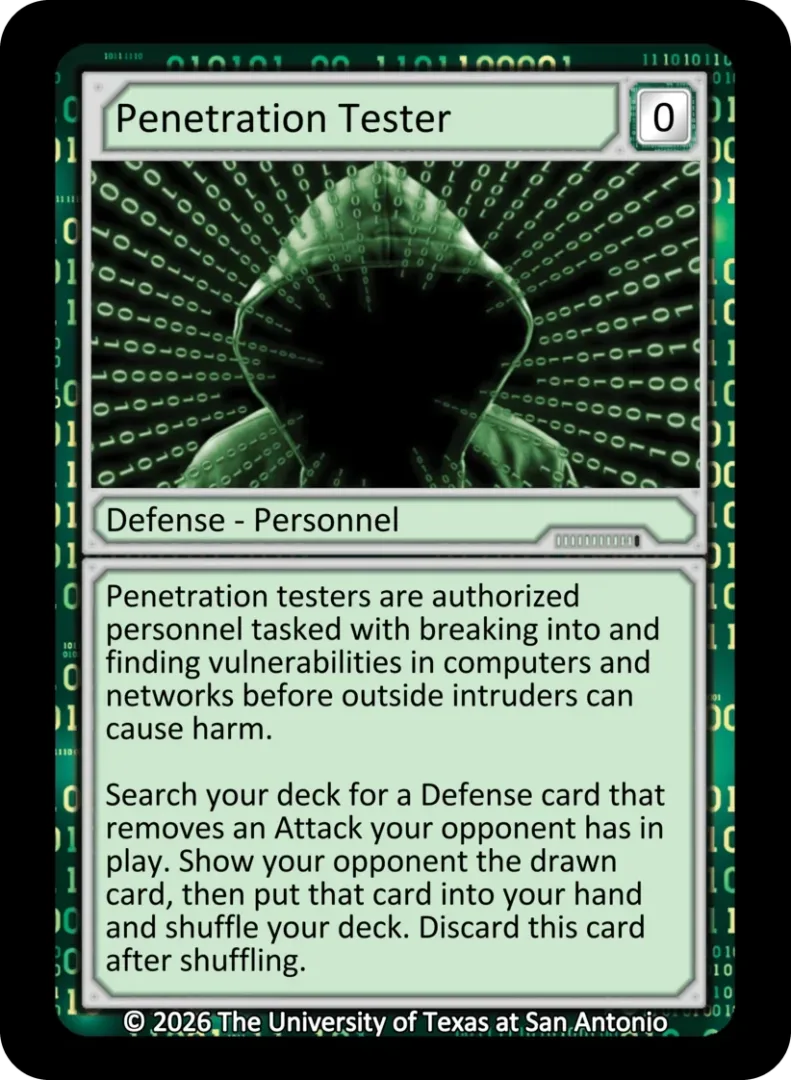
Penetration testers are authorized personnel tasked with breaking into and finding vulnerabilities in computers and networks before outside intruders can cause harm.
Search your deck for a Defense card that removes an Attack card your opponent has in play. Show your opponent the drawn card, then put that card into your hand and shuffle the deck. Discard this card after shuffling.
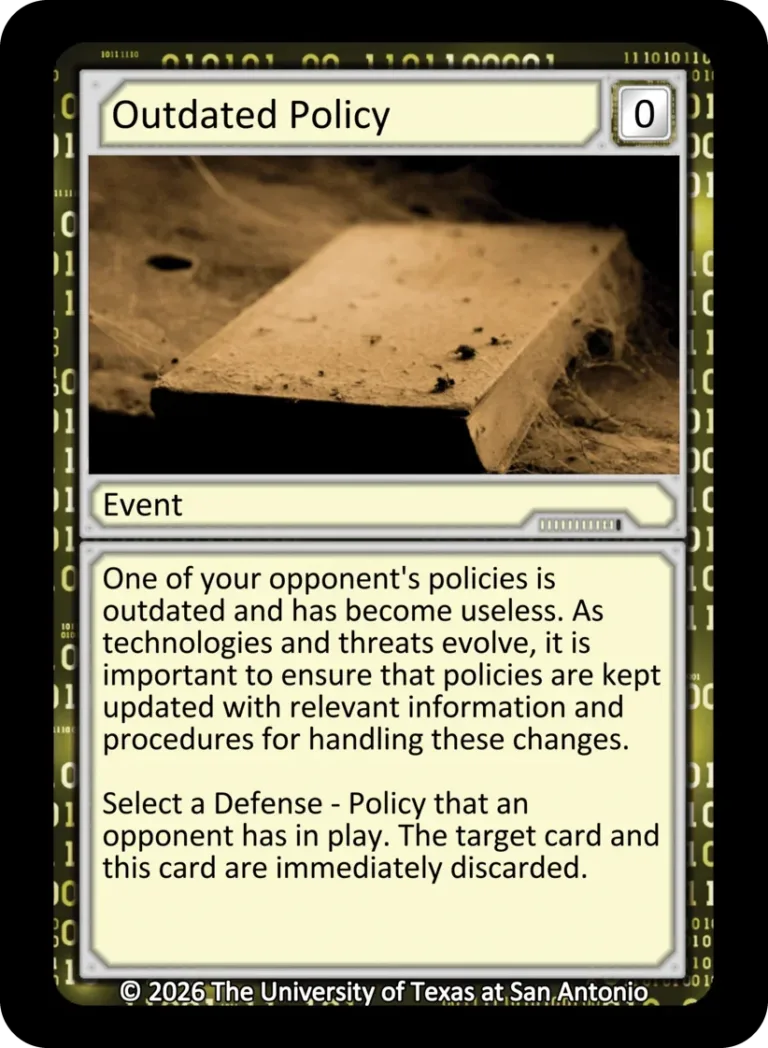
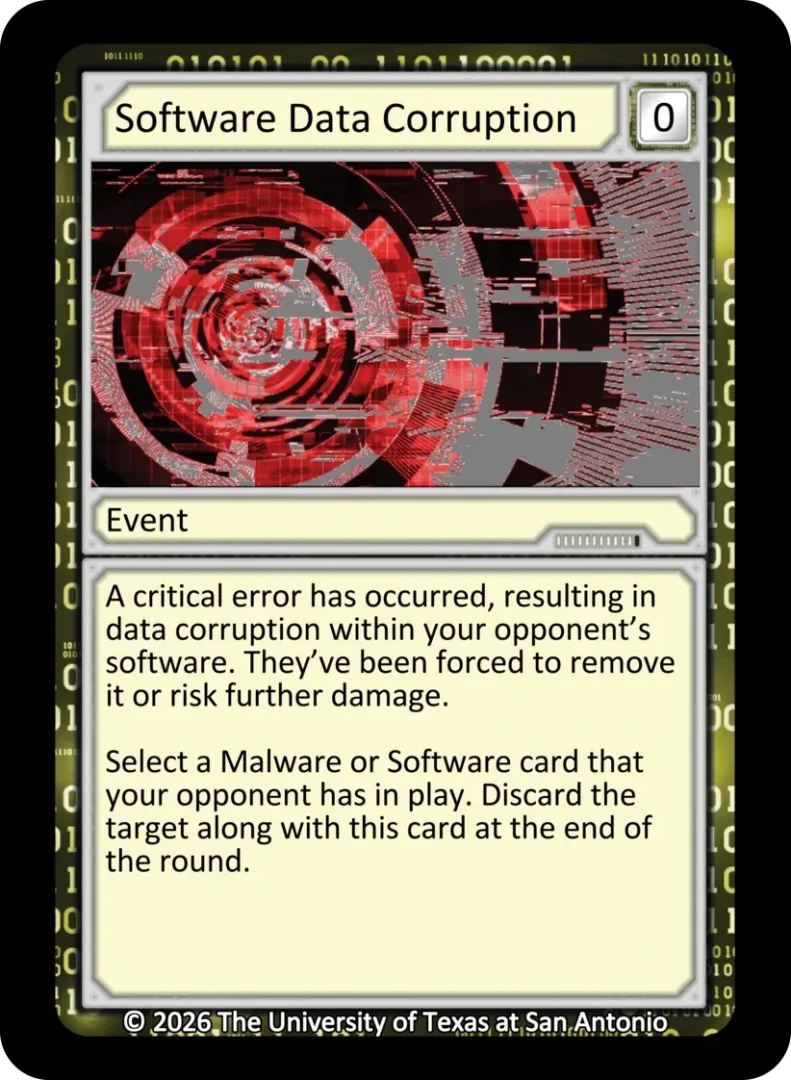
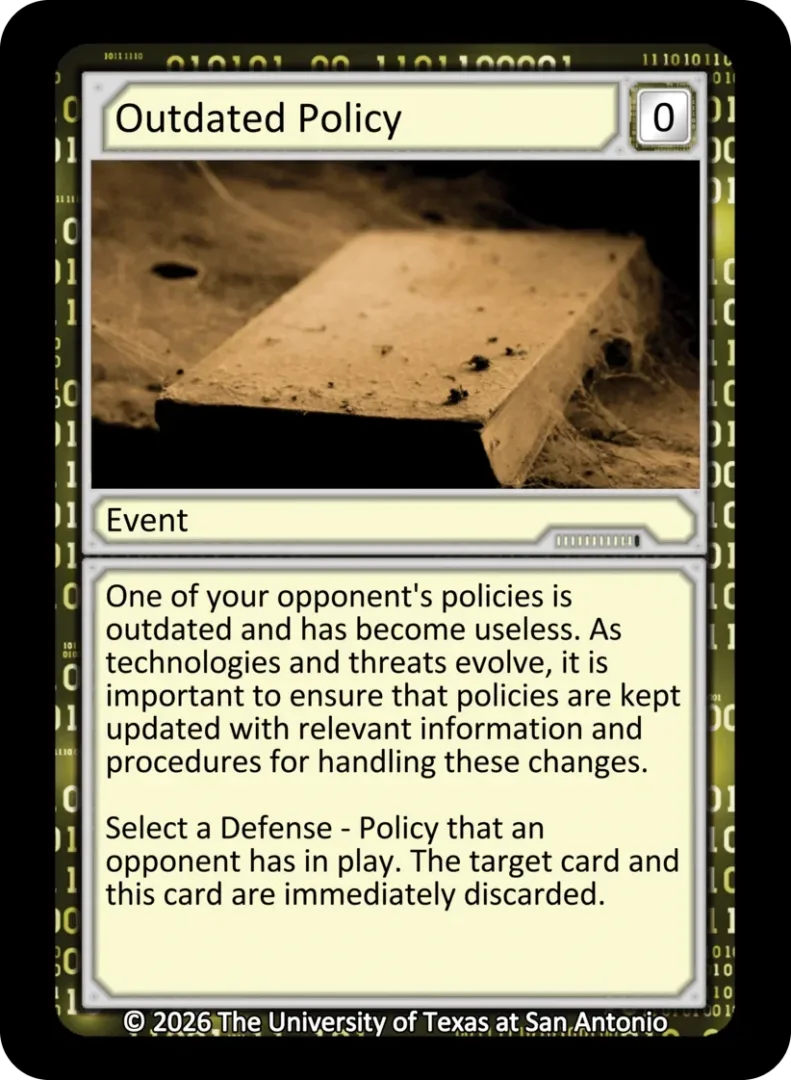
One of your opponent’s policies is outdated and has become useless. As technologies and threats evolve, it is important to ensure that policies are kept updated with relevant information and procedures for handling these changes.
Select a Defense – Policy card that an opponent has in play. The target card and this card are immediately discarded.
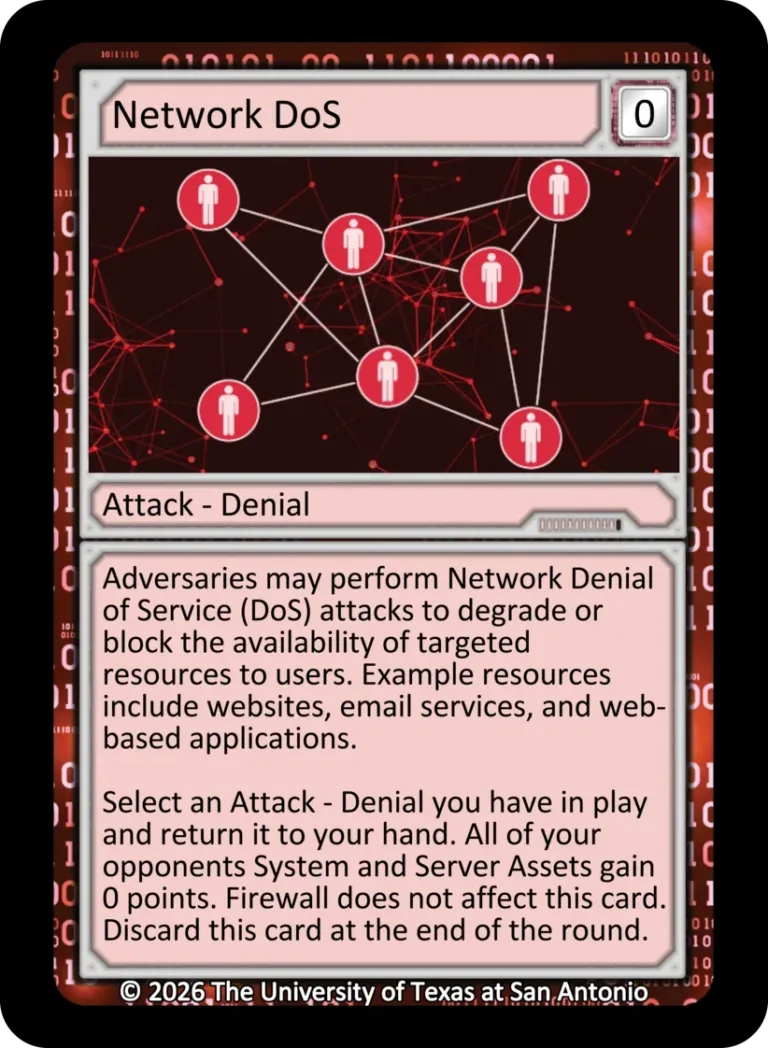
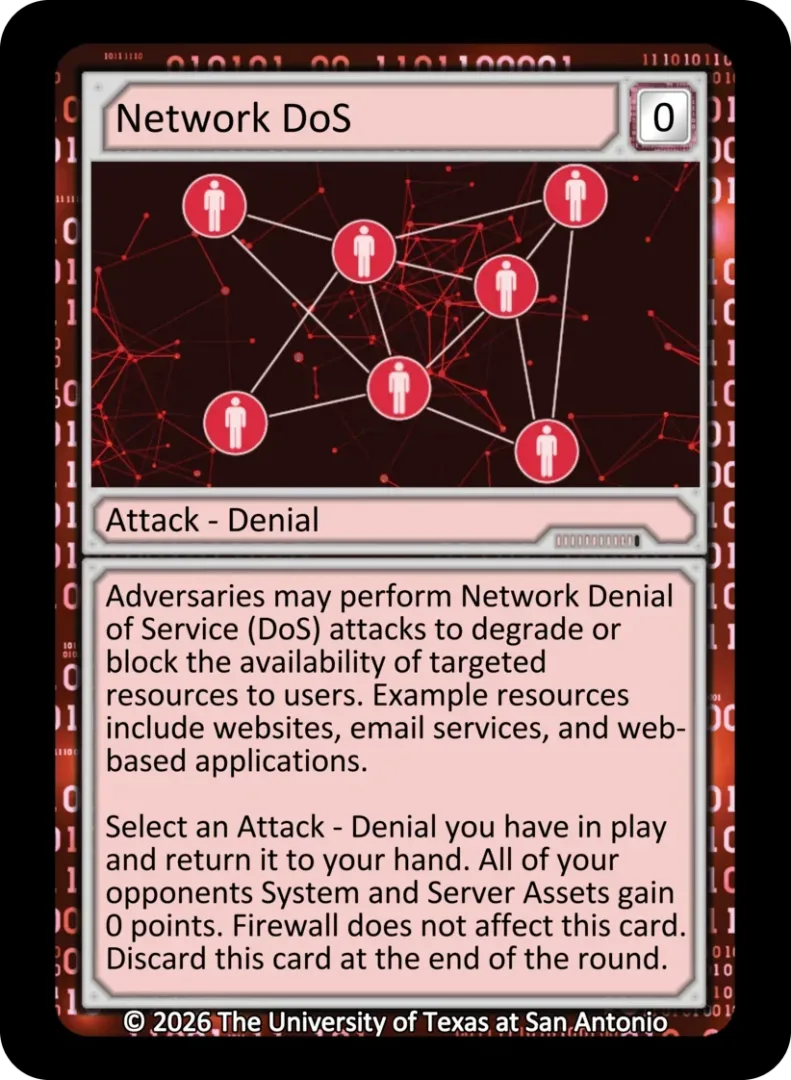
Adversaries may perform Network Denial of Service (DoS) attacks to degrade or block the availability of targeted resources to users. Example resources include websites, email services and web-based applications.
Select an Attack – Denial card you have in play and return it to your hand. All of your opponent’s System and Server Assets gain 0 points. Firewall does not affect this card. Discard this card at the end of the round.
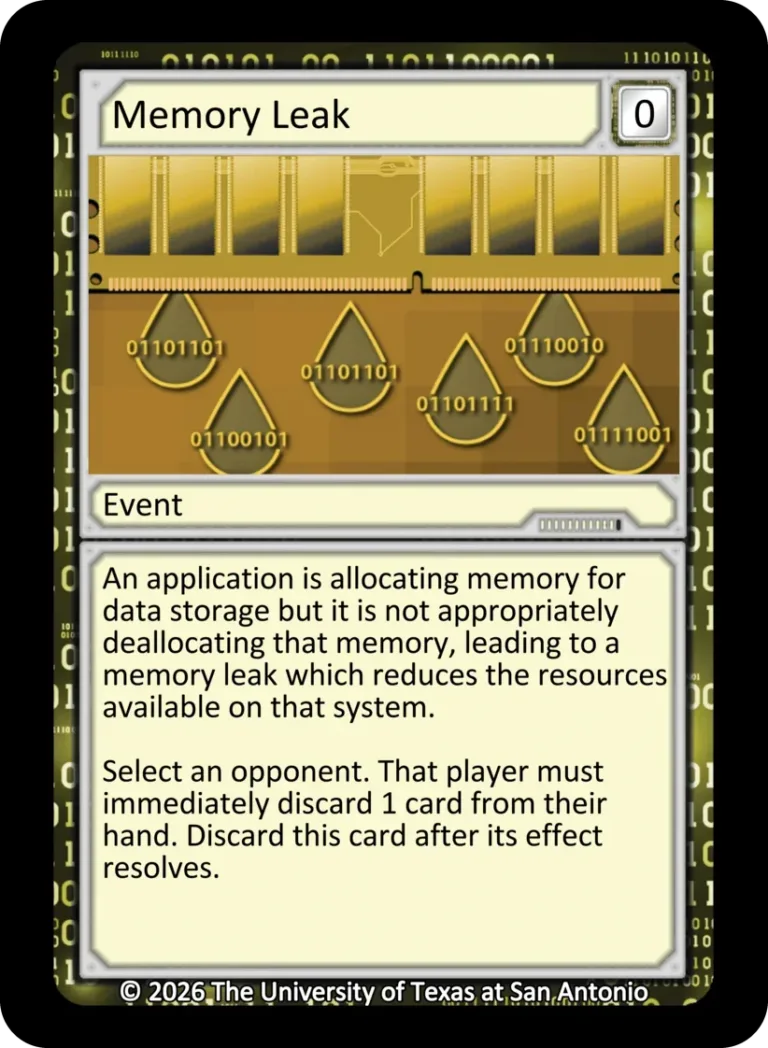
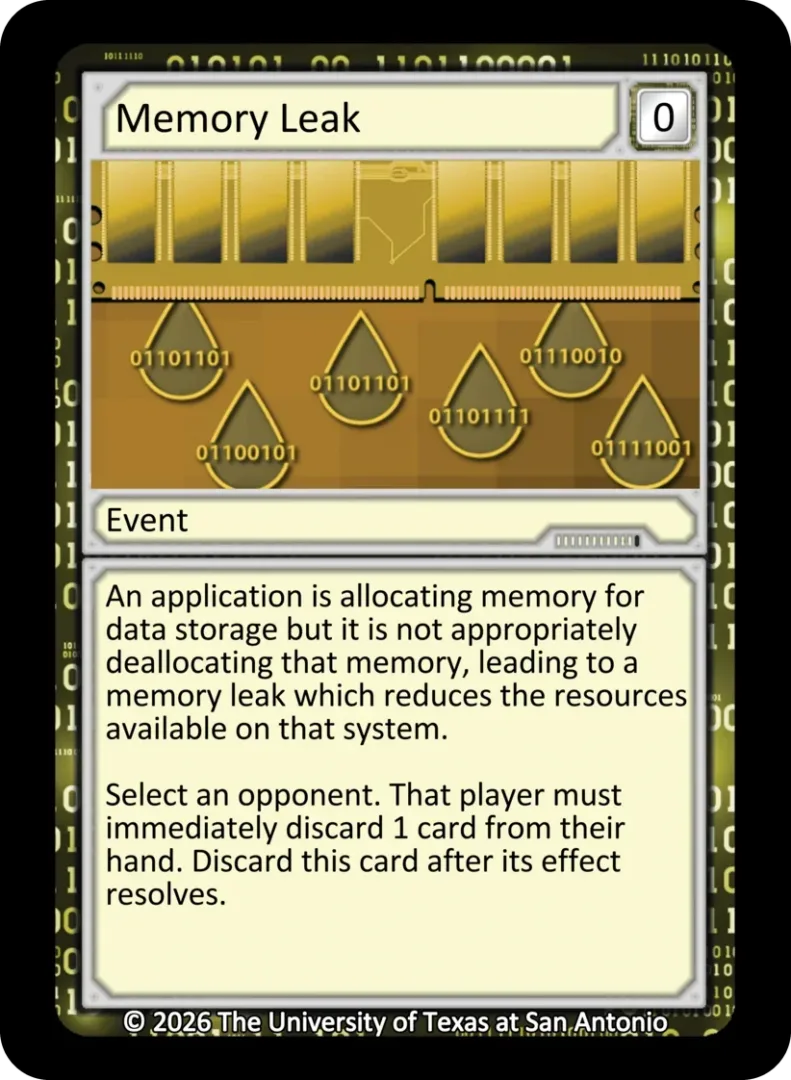
An application is allocating memory for data storage but is not appropriately deallocating that memory, leading to a memory leak which reduces the resources available on that system.
Select an opponent. That player must immediately discard one (1) card from their hand. Discard this card after its effect resolves.
An Insider Threat is someone who has authorized access and causes a negative impact to an organization either intentionally or unintentionally.
Remove one Asset – Personnel, Defense – Personnel, or a Defense – Software card that an opponent has in play. That opponent loses 2 points at the end of the round. Discard this card at the end of the round.
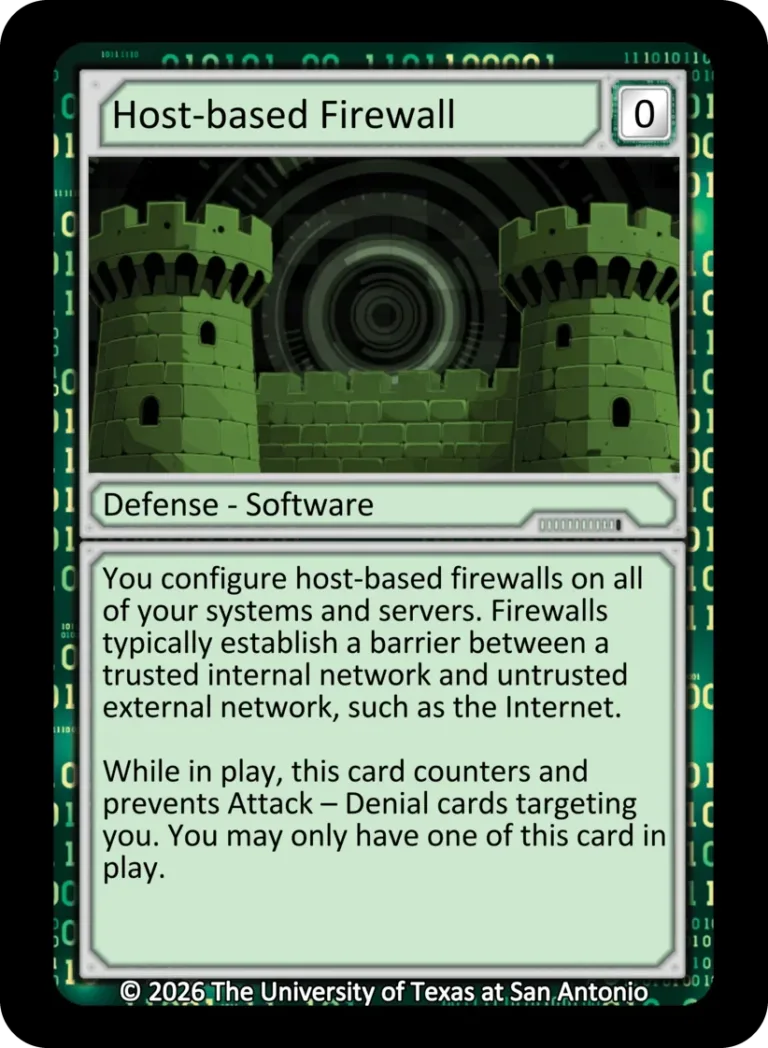
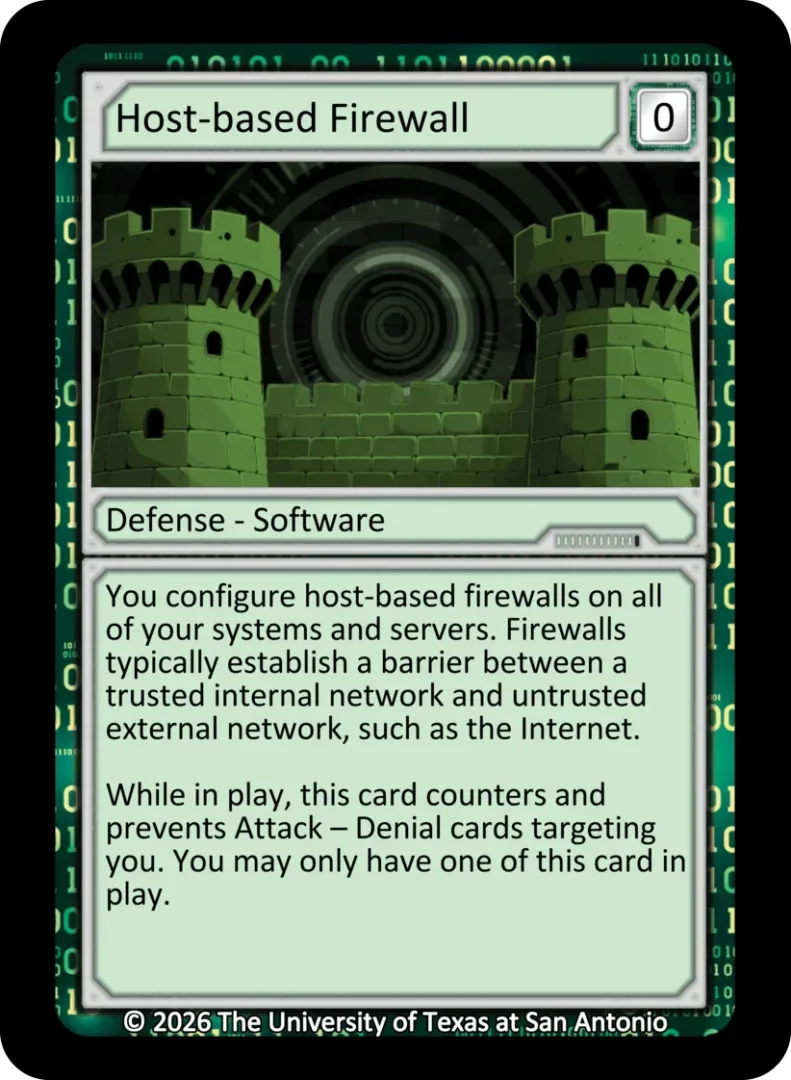
You configure host-based firewalls on all of your systems and servers. Firewalls typically establish a barrier between a trusted internal network and untrusted external network, such as the Internet.
While in play, this card counters and prevents Attack – Denial cards targeting you. You may only have one of this card in play.
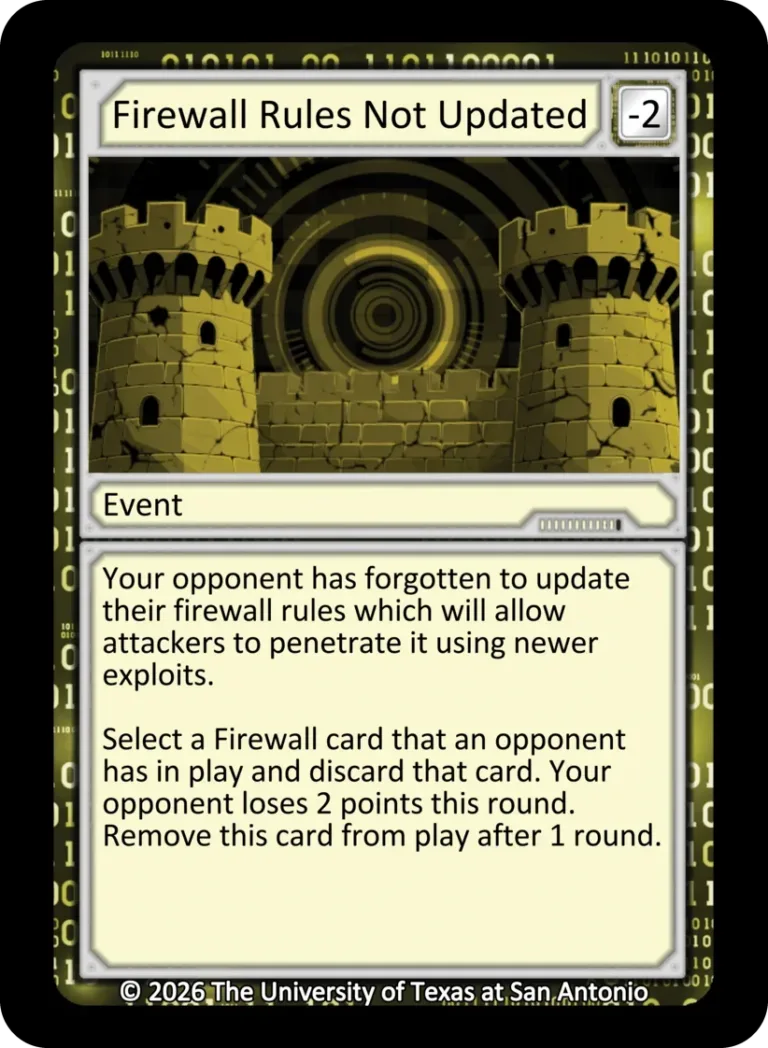
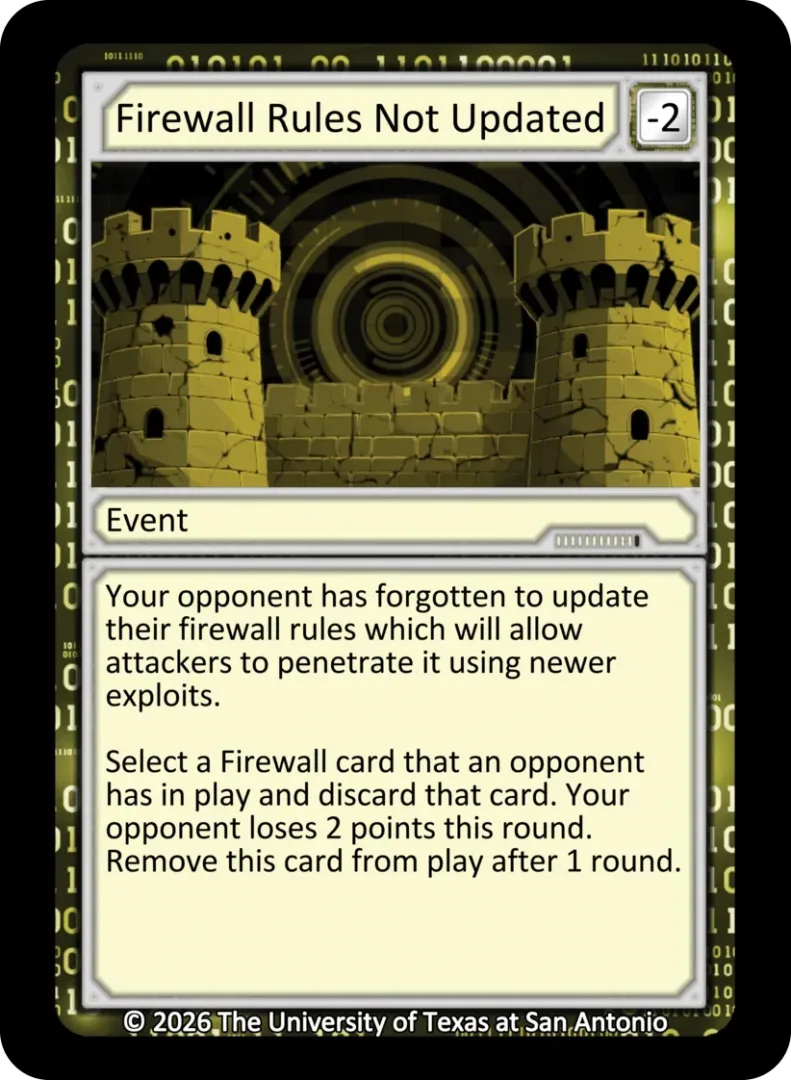
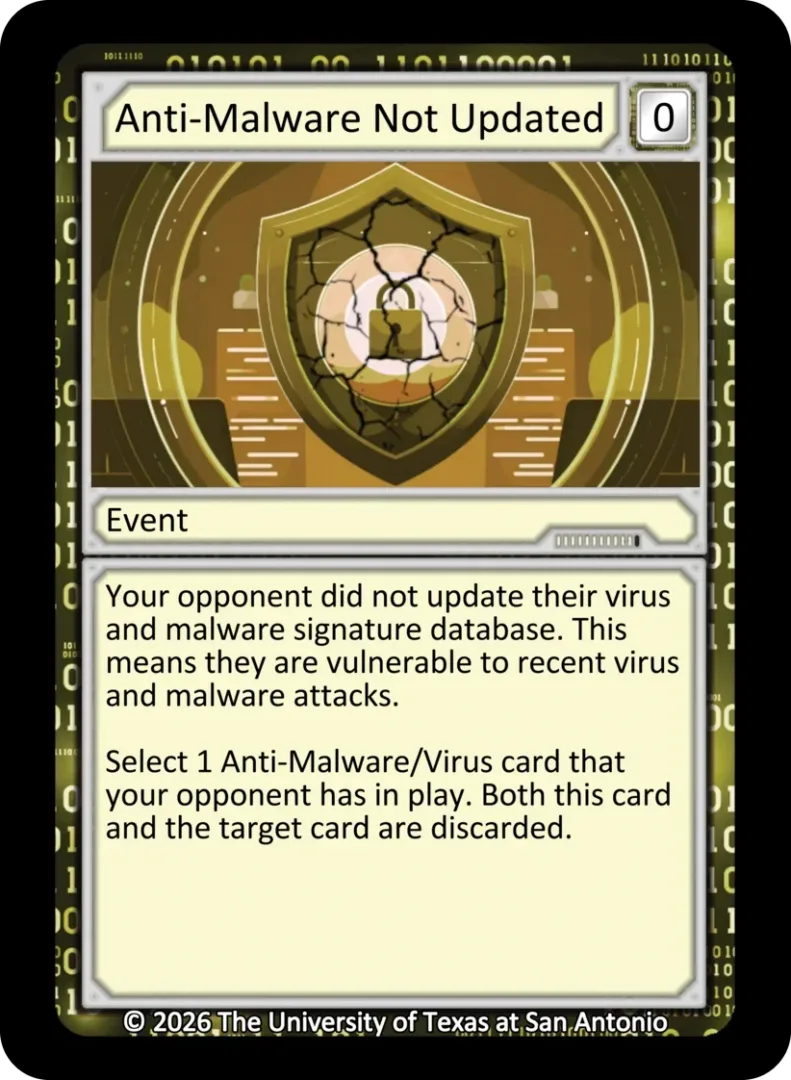
Your opponent has forgotten to update their firewall rules, which will allow attackers to penetrate it using newer exploits.
Select a Firewall card that an opponent has in play and discard that card. Your opponent loses two (2) points this round. Remove this card from play after one (1) round.
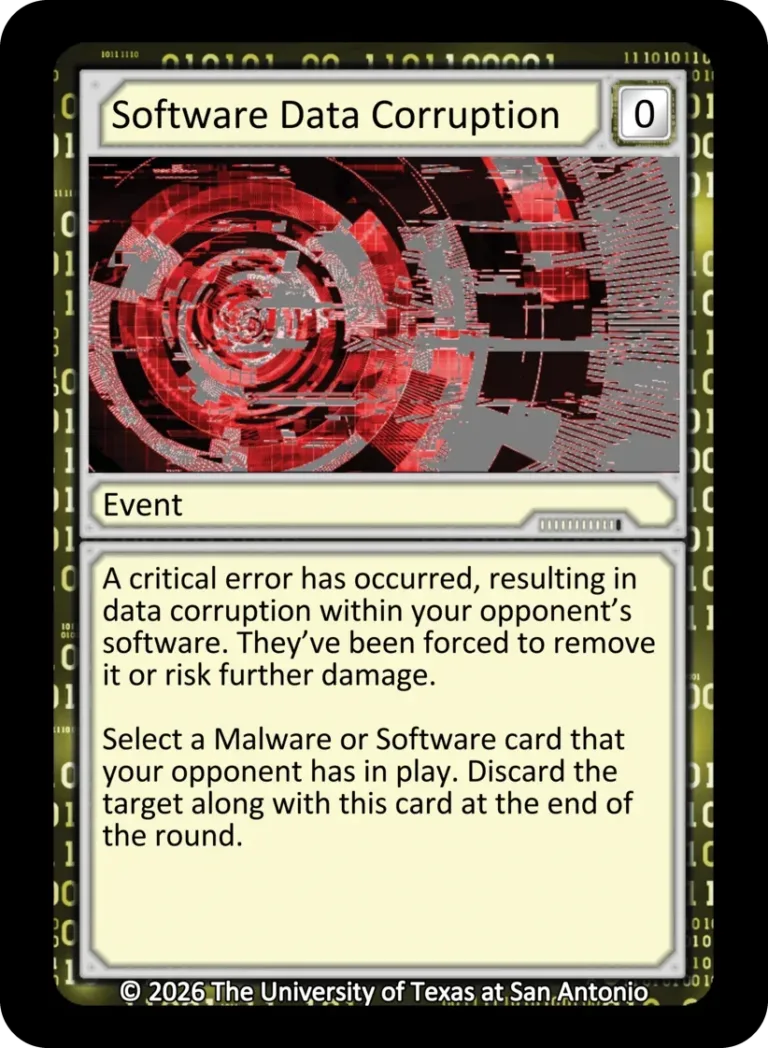
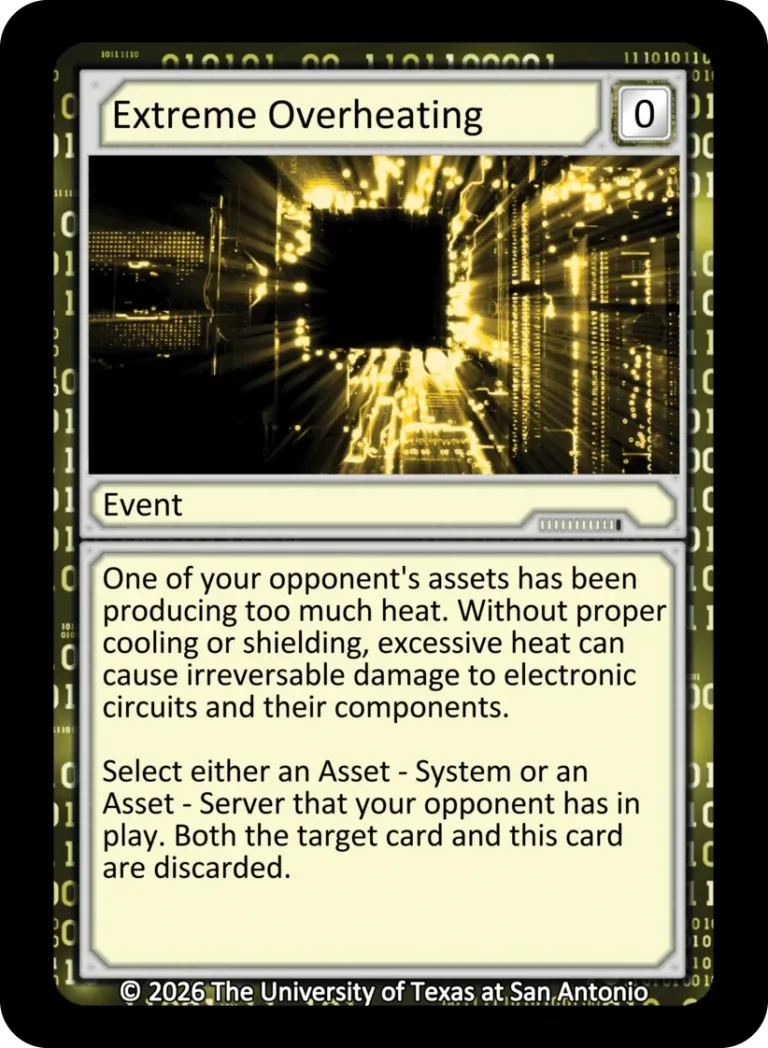
One of your opponent’s assets has been producing too much heat. Without proper cooling or shielding, excessive heat can cause irreversible damage to electronic circuits and their components.
Select either an Asset – System or an Asset – Server that your opponent has in play. Both the target card and this card are discarded.
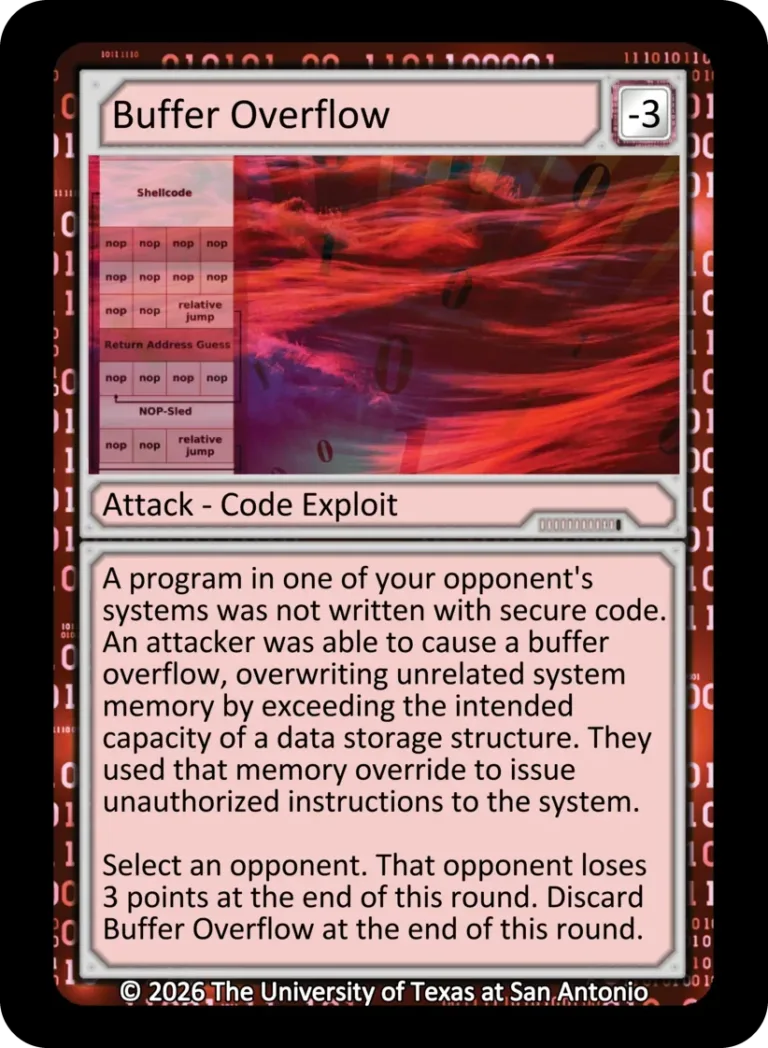
A program in one of your opponent’s systems was not written with secure code. An attacker was able to cause a buffer overflow, overwriting an unrelated system memory by exceeding the intended capacity of a data storage structure. They used that memory override to issue unauthorized instructions to the system.
Select an opponent. That opponent loses 3 points at the end of this round. Discard the Buffer Overflow card at the end of the round.
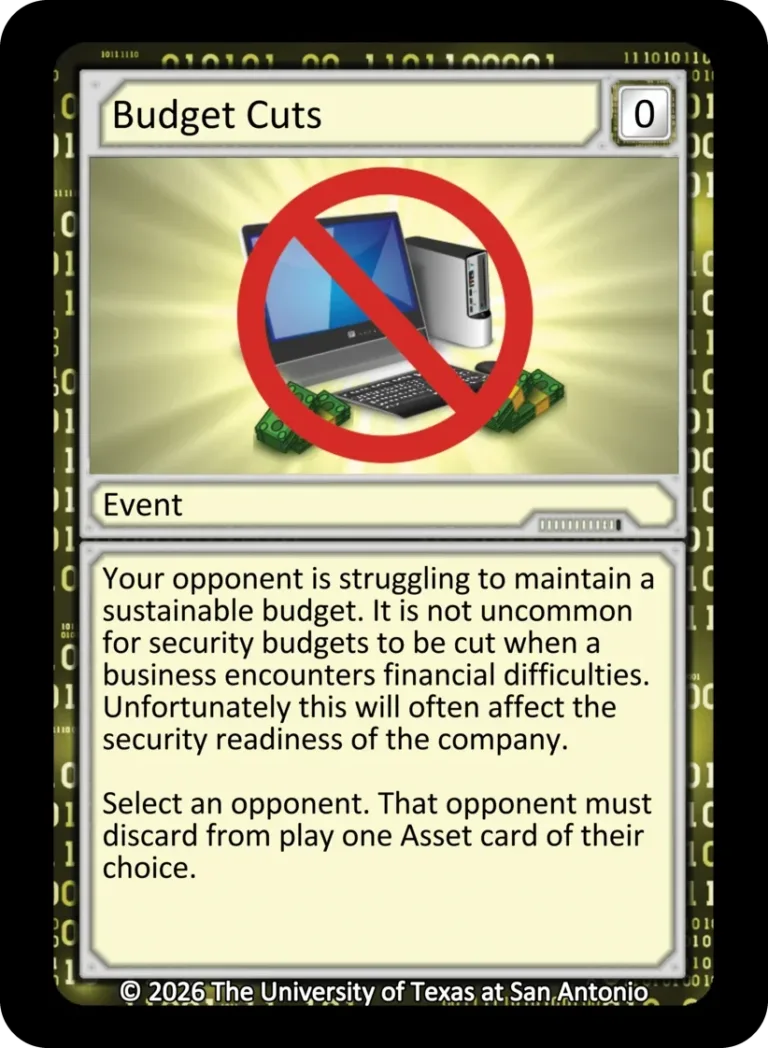
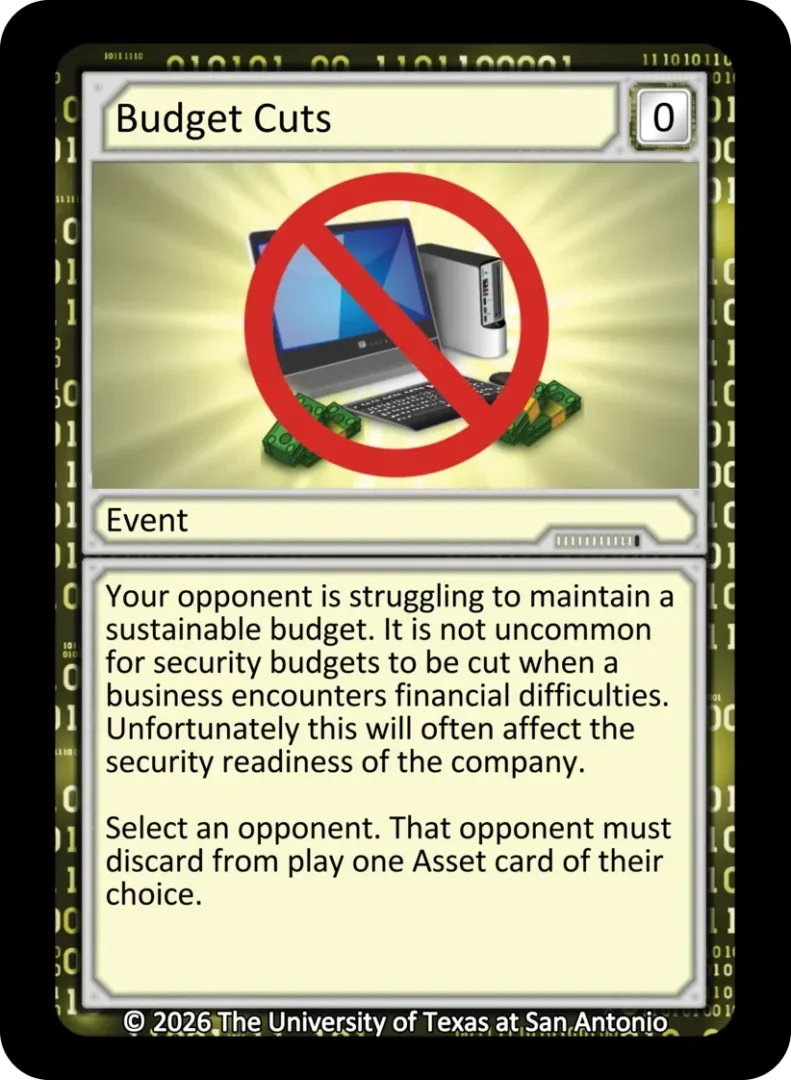
Your opponent is struggling to maintain a sustainable budget. It is not uncommon for security budgets to be cut when a business encounters financial difficulties. Unfortunately, this will often affect the security readiness of the company.
Select an opponent. That opponent must discard from play one Asset card of their choice.
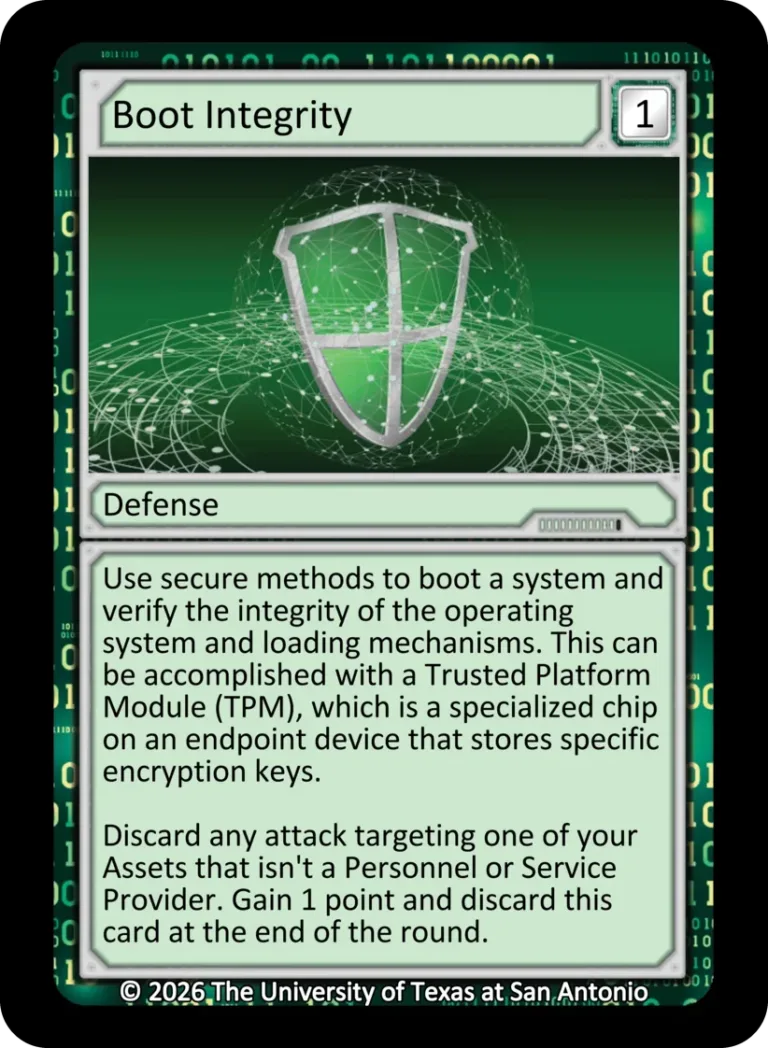
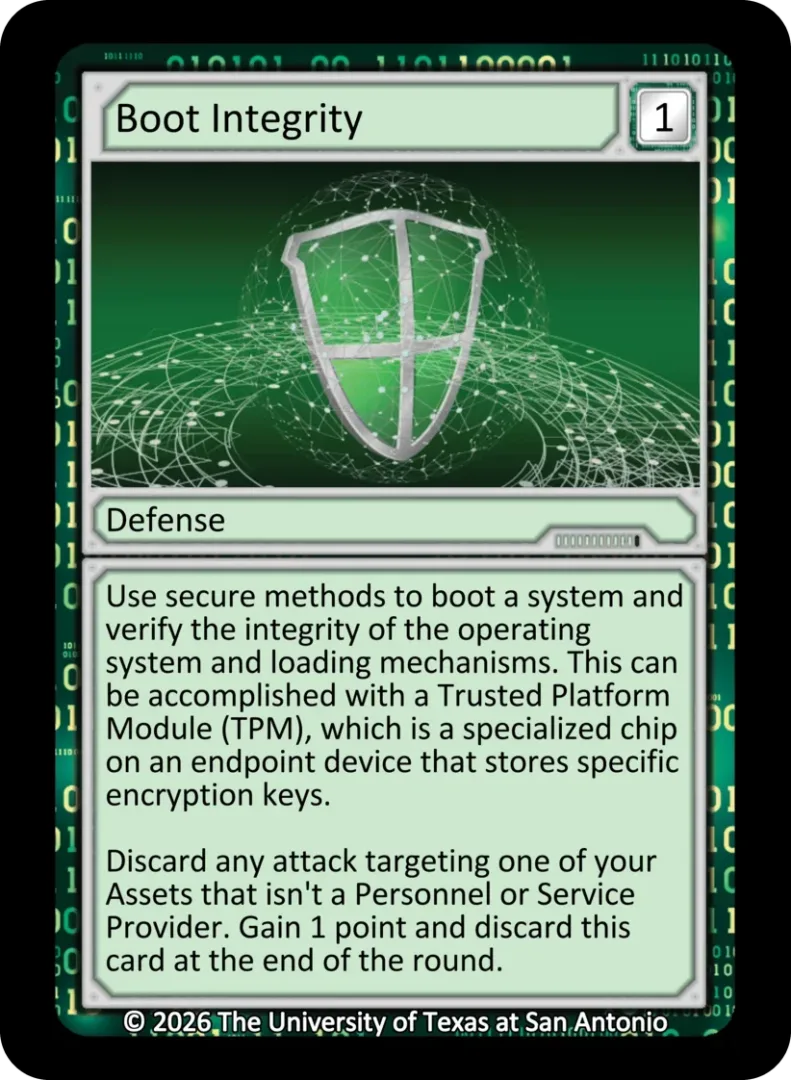
Use secure methods to boot a system and verify the integrity of the operating system and loading mechanisms. This can be accomplished with a Trusted Platform Module (TPM), which is a specialized chip on an endpoint device that stores specific encryption keys.
Discard any attack targeting one of your Assets that isn’t a Personnel or Service Provider. Gain 1 point and discard this card at the end of the round.
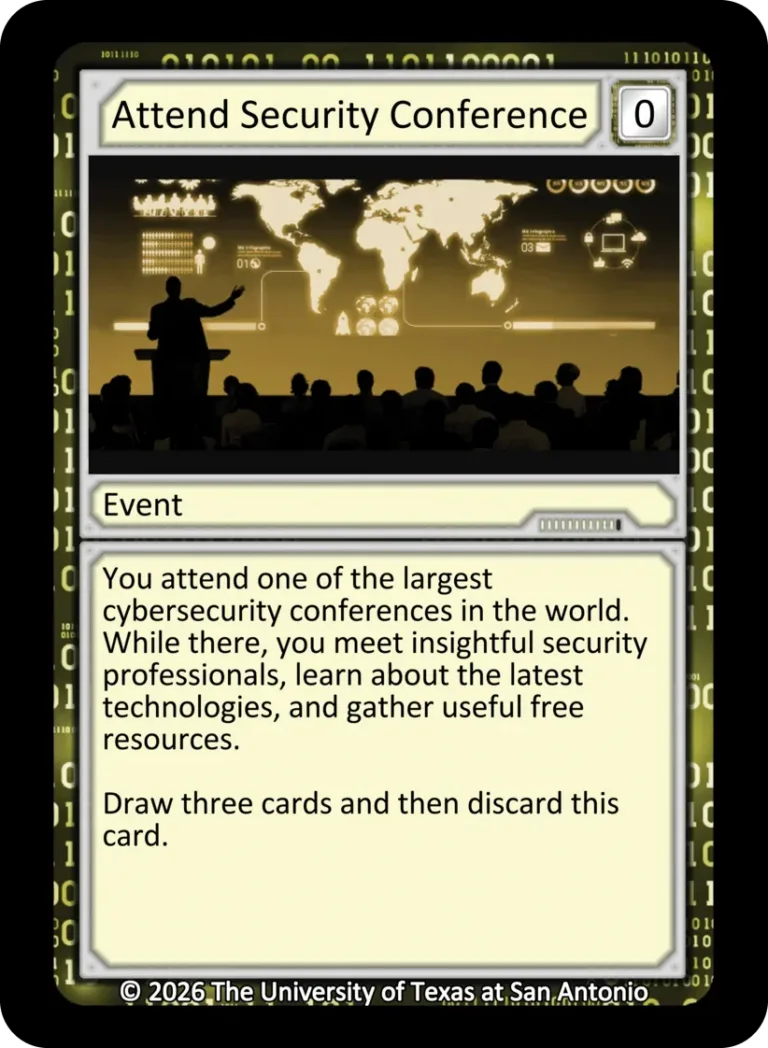
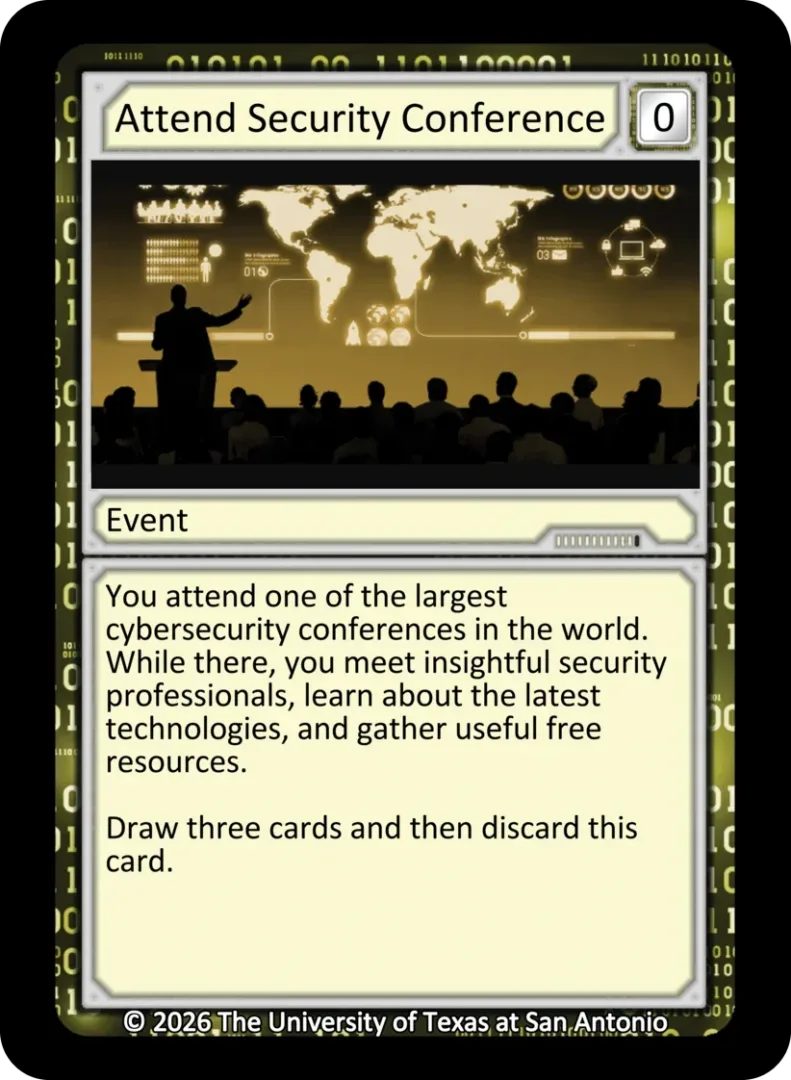
You attend one of the largest cybersecurity conferences in the world. While there, you meet insightful security professionals, learn about the latest technologies, and gather useful free resources.
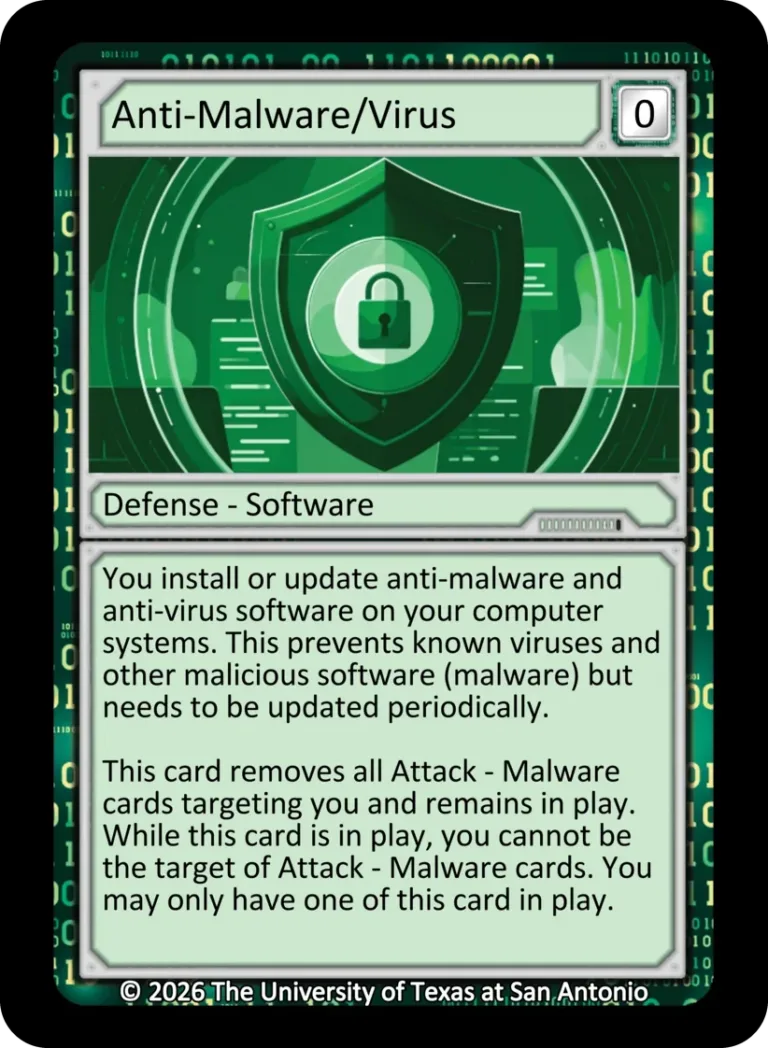
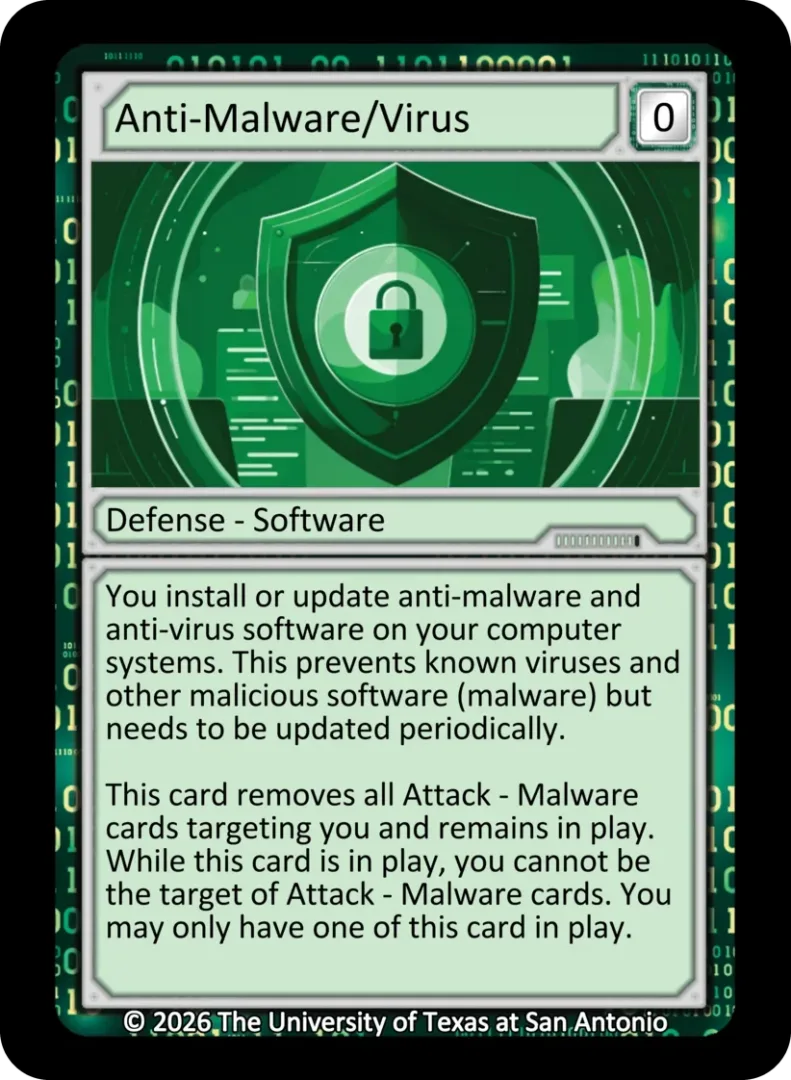
You install or update anti-malware and anti-virus software on your computer systems. This prevents known viruses and other malicious software (malware), but needs to be updated periodically.
This card removes all Attack – Malware cards targeting you and remains in play. While this card is in play, you cannot be the target of Attack – Malware cards. You may only have one of this card in play.
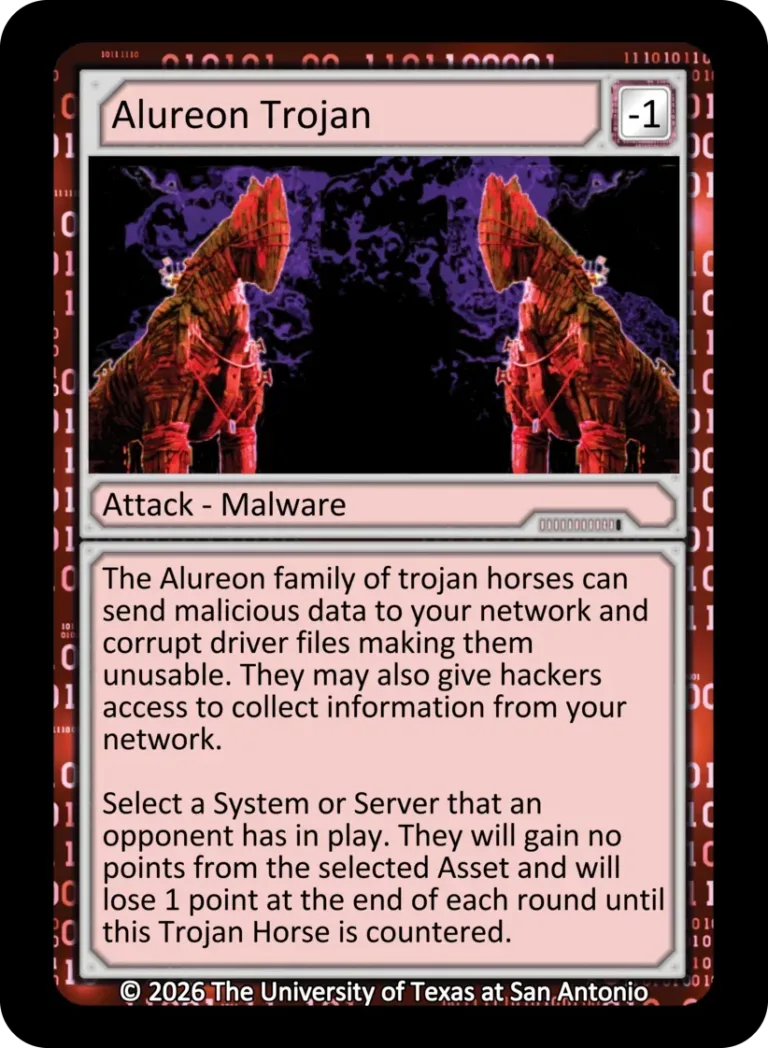
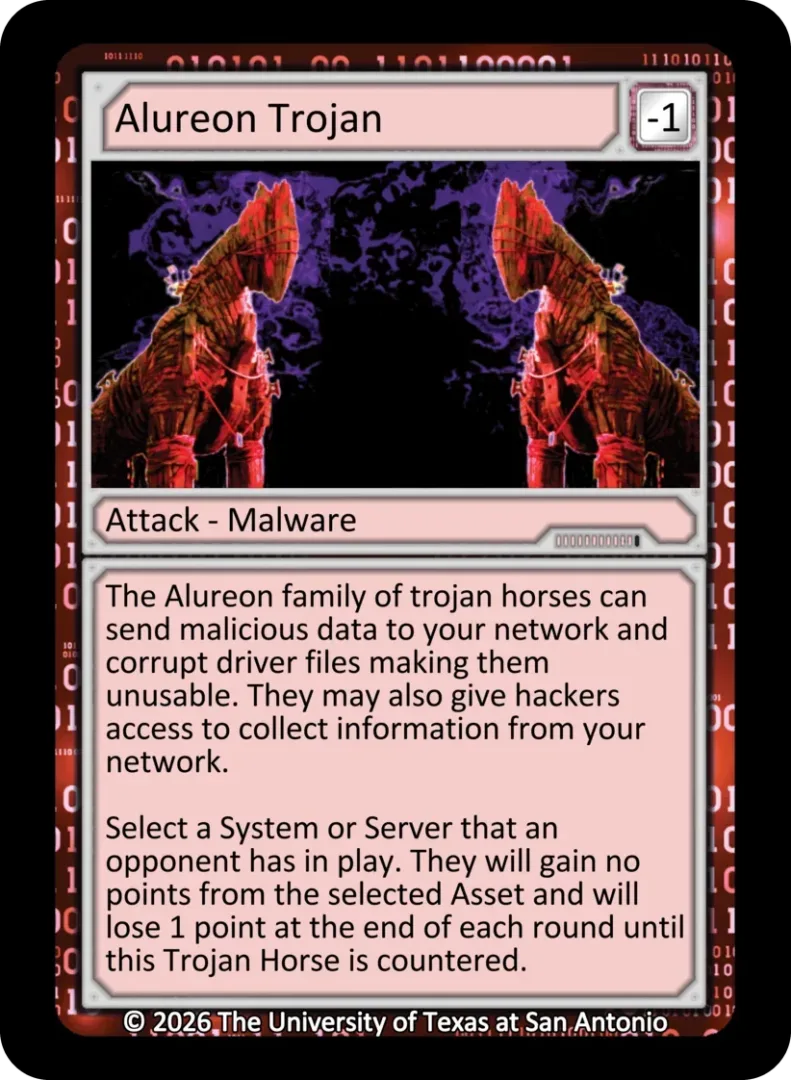
The Alureon family of trojan horses can send malicious data to your network and corrupt driver files making them unusable. They may also give hackers access to collect information from your network.
Select a System or Server that an opponent has in play. They will gain no points from the selected Asset and will lose 1 point at the end of each round until this Trojan Horse is countered.
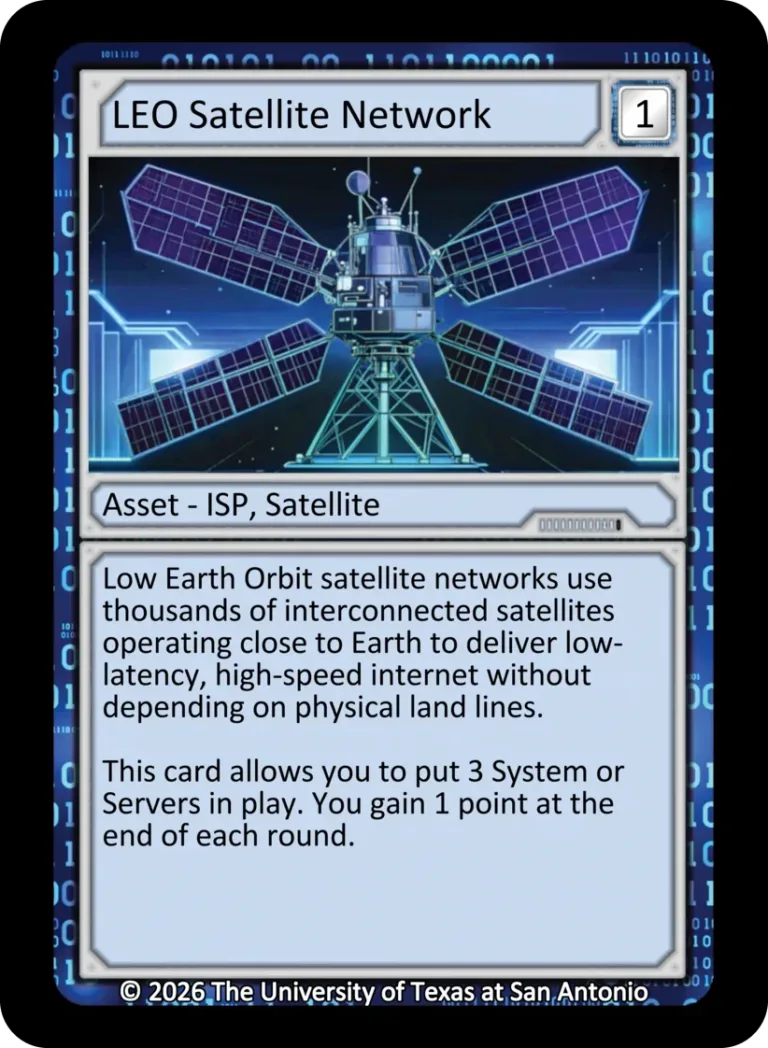
Low Earth Orbit satellite networks use thousands of interconnected satellites operating close to Earth to deliver low-latency, high-speed internet without depending on physical land lines.
This card allows you to put 3 System or Servers in play. You gain 1 point at the end of each round.
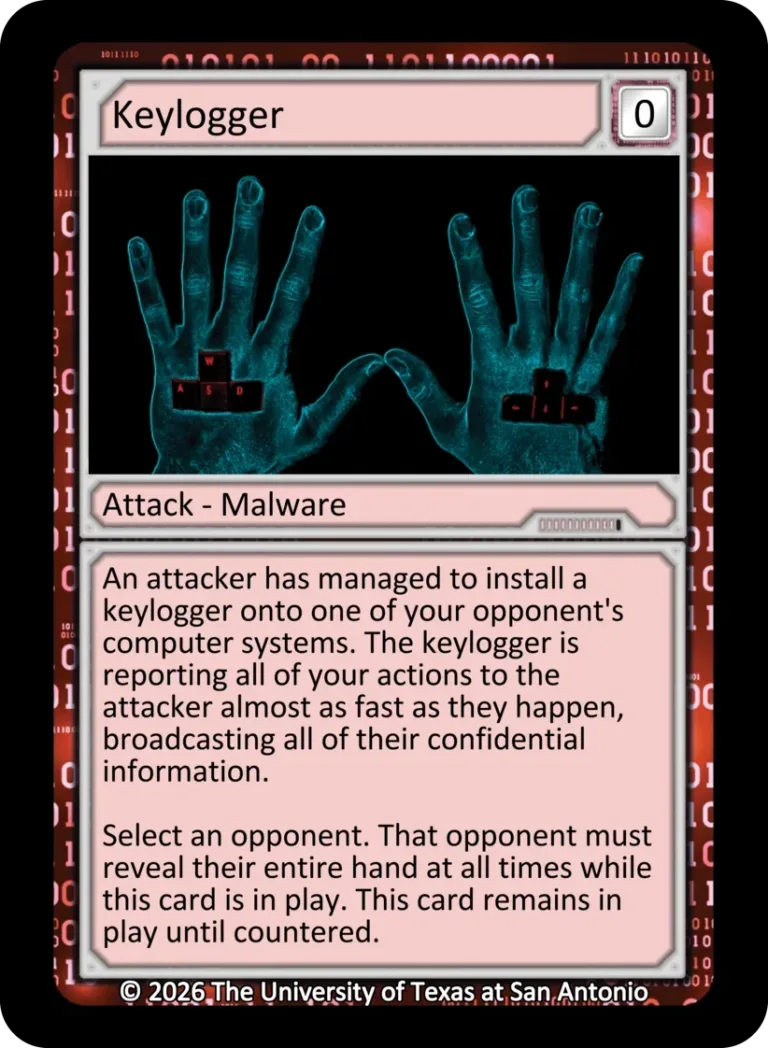
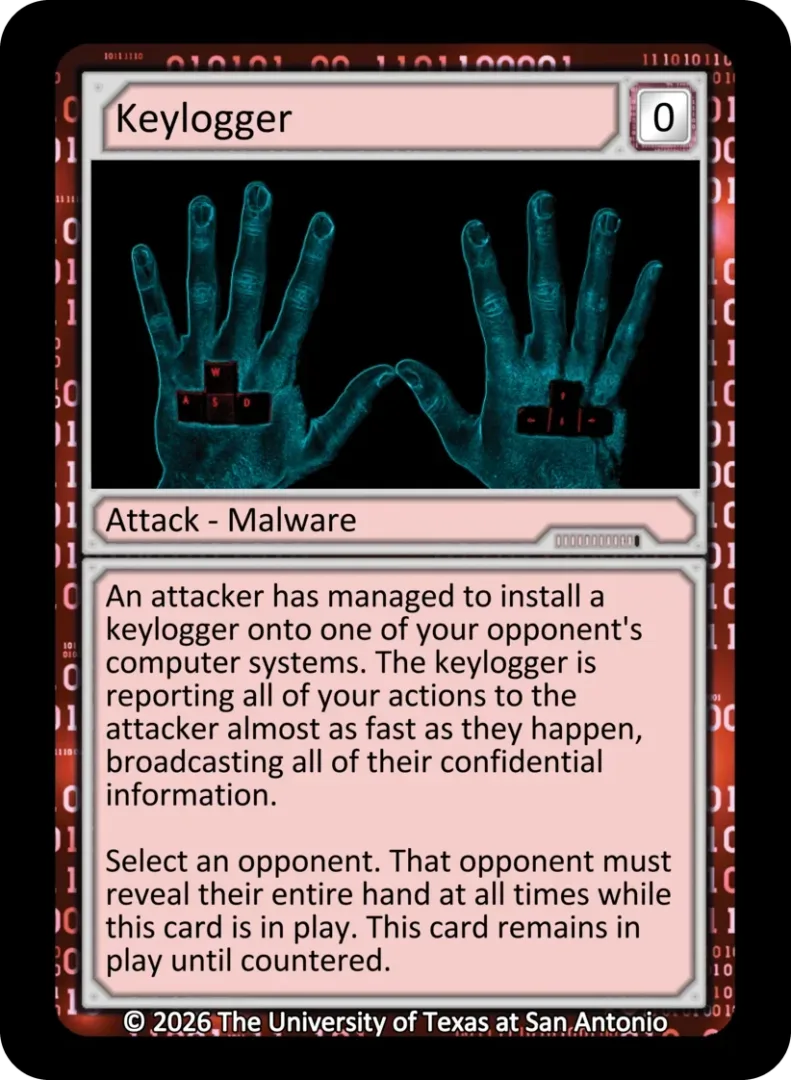
An attacker has managed to install a keylogger onto one of your opponent’s computer systems. The keylogger is reporting all of your actions to the attacker almost as fast as they happen, broadcasting all of their confidential information.
Select an opponent. That opponent must reveal their entire hand at all times while this card is in play. This card remains in play until countered.